Last updated November 22, 2026
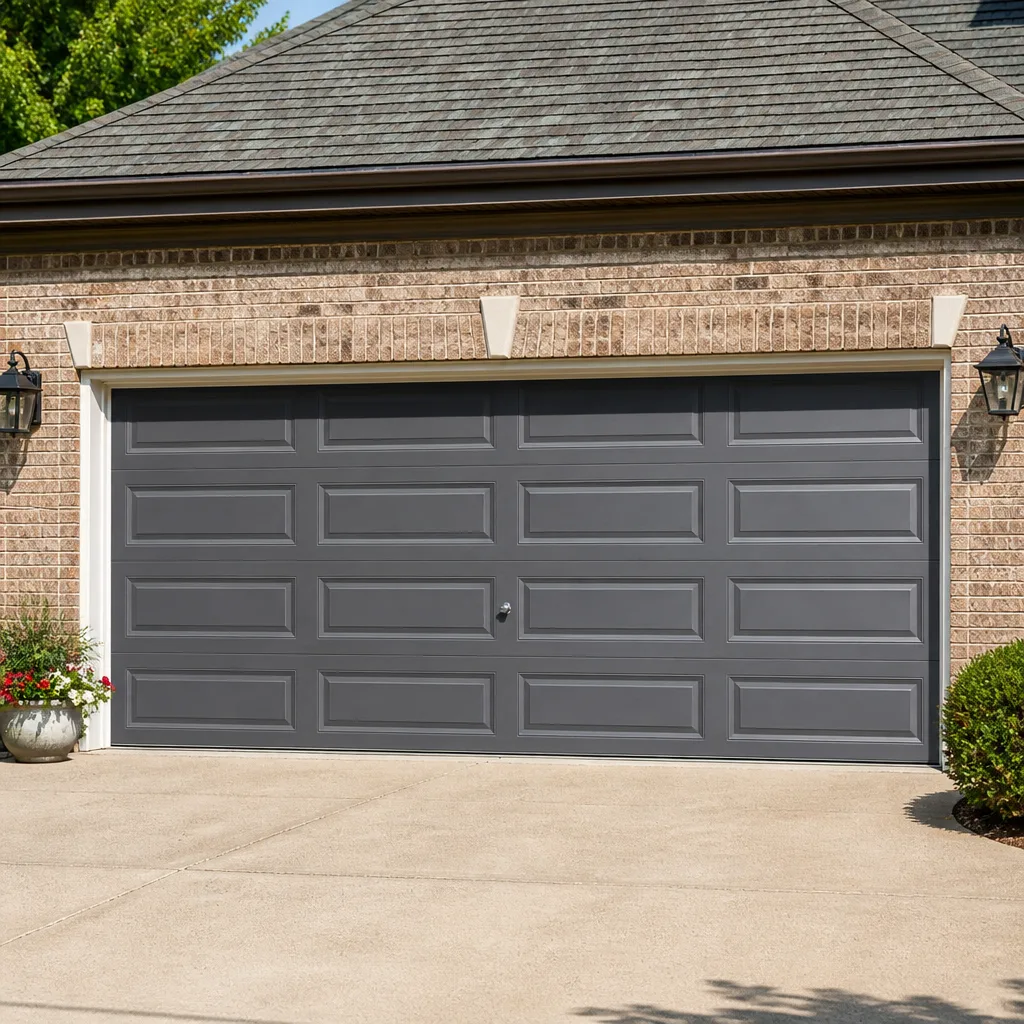 Raised-panel steel
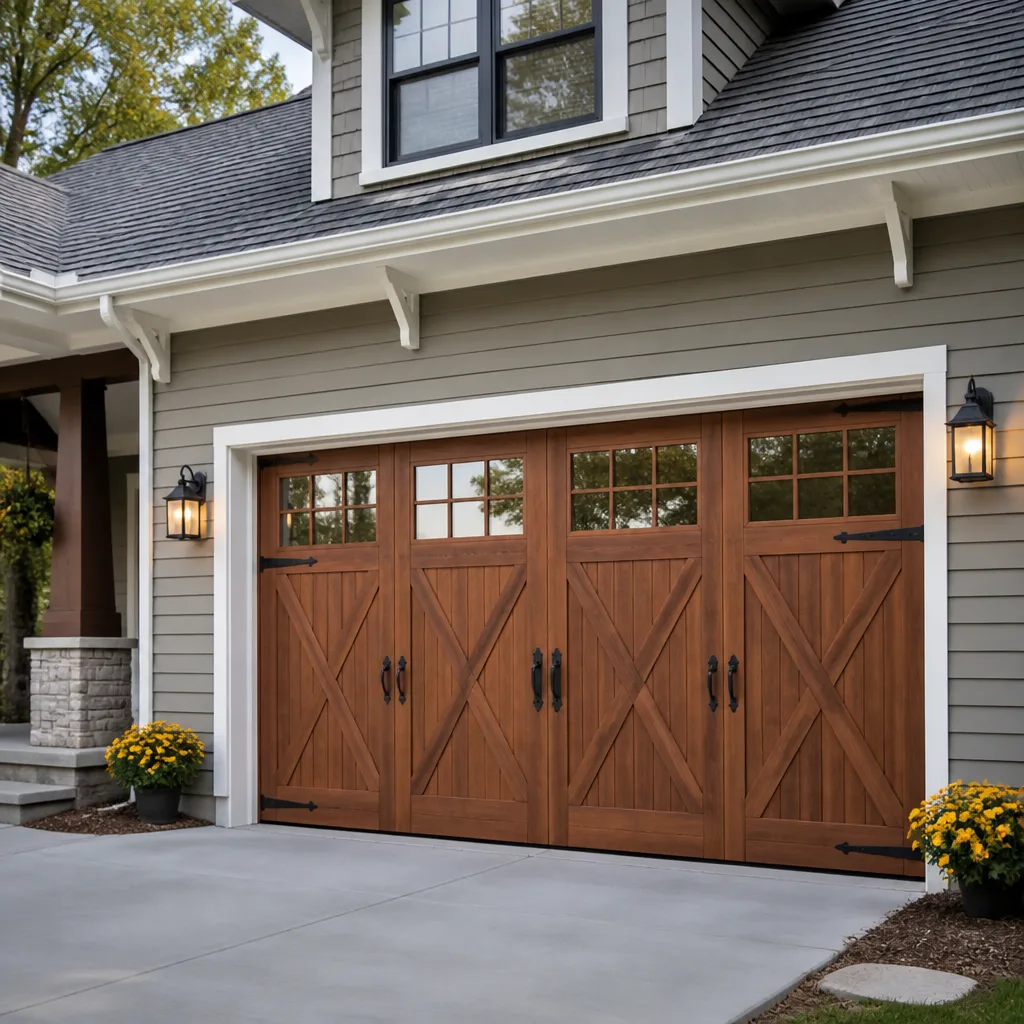 Carriage house
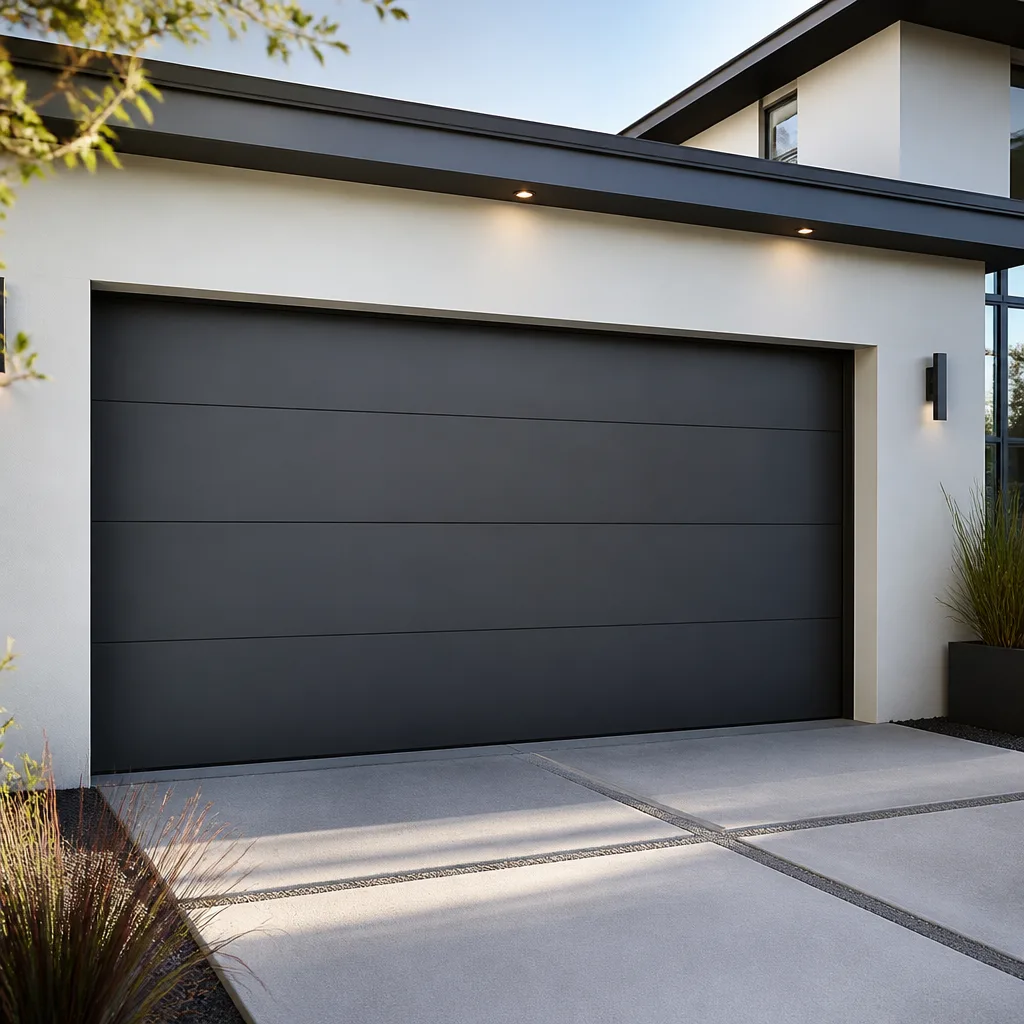 Modern flush
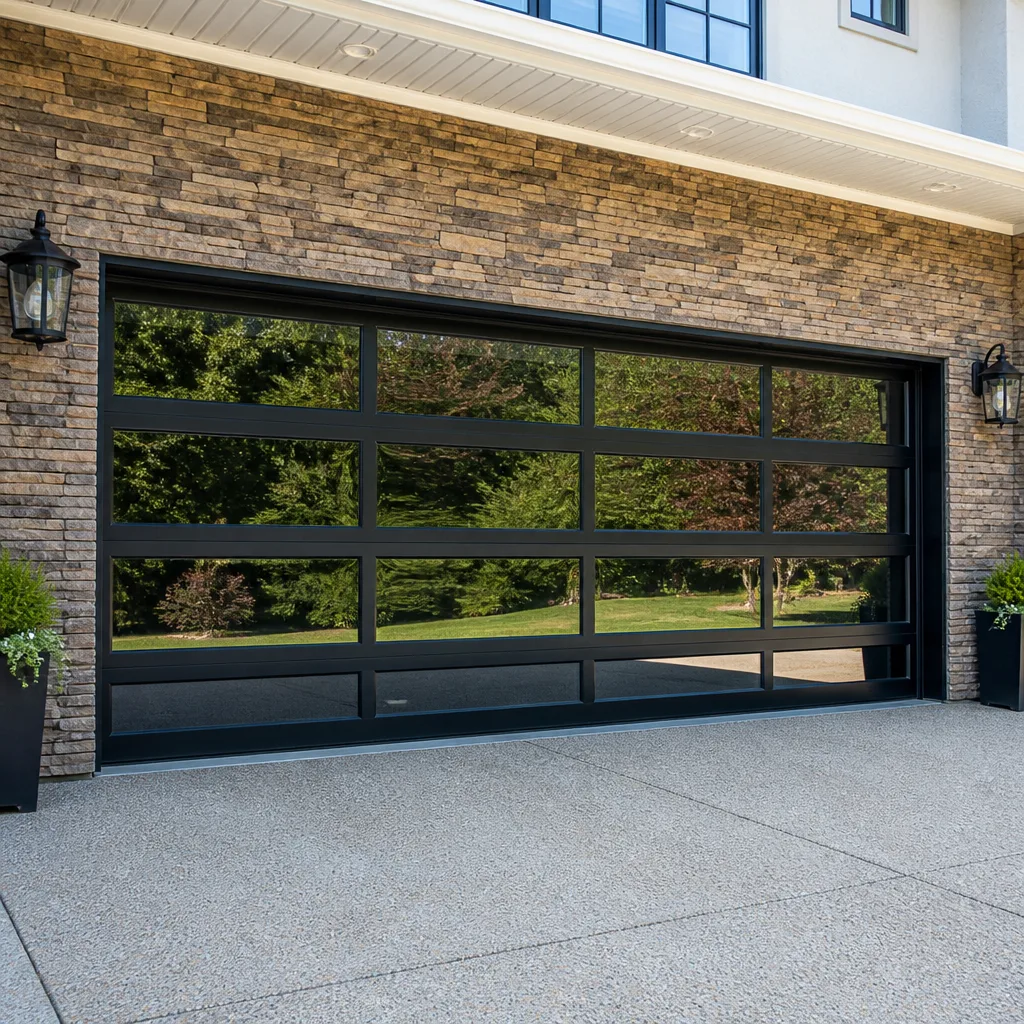 Full-view glass
 LiftMaster openers
 Chamberlain openers
Full 25-point door and opener safety check with every visit - springs, cables, rollers, tracks, and your LiftMaster or Chamberlain opener included
You get a price before we start. It does not change when the pro arrives.
Get your free estimateGarage Door Warning Signs: A Cutler Bay Homeowner’s Reference Guide
Most garage door warning signs are the same everywhere: a shudder, a rattle, a remote that needs two presses instead of one. What surprises homeowners is how often those small signs are hiding something bigger. A garage door that hesitates for two seconds before it moves isn’t just annoying. In Cutler Bay’s humidity, that pause is often the first sign of a corroded torsion spring that’s weeks away from failing under full load. The door still lifts, so nothing feels urgent, and that’s exactly the trap.
This guide breaks down the warning signs we see most in Cutler Bay homes, how to read them, and when a small repair is a same-week job versus a same-day call. You’ll learn which sounds point to which parts, how to tell a track problem from a spring problem, and how the local heat and moisture affect springs, openers, and hardware. It’s written to be useful whether your door is new or twenty years old.
Quick Answer
The most important garage door warning signs are a door that pauses before moving, a snapping or popping sound, visible rust on the springs, a door that reverses before closing, and an opener that responds slowly or randomly. In Cutler Bay, humidity accelerates spring corrosion and stresses opener circuit boards, so these signs tend to appear sooner than in drier climates. A door that still opens but shows two or more of these signs should be inspected before it fails completely, because spring failure under load is the most dangerous garage door problem there is.
Styles & brands we work with
- Raised-panel steel
- Carriage house
- Modern flush
- Full-view glass
- LiftMaster openers
- Chamberlain openers
Table of Contents
- Why Cutler Bay Doors Age Differently: Humidity and Heat
- Corrosion Warning Signs That Look Cosmetic (But Aren’t)
- Opener Behavior That Points to a Real Problem
- Track Problem or Spring Problem? How to Tell Them Apart
- The Sound Diagnostic: What Each Garage Door Noise Means
- Same-Week Repair or Same-Day Emergency? A Triage Framework
- What to Check Before and After a Storm
- Brand-Specific Quirks Worth Knowing
Why Cutler Bay Doors Age Differently: Humidity and Heat
A garage door in a dry climate can go a decade or longer before you see serious rust on the hardware. In Cutler Bay, the combination of year-round warmth and heavy humidity means metal parts are almost always working against moisture. Springs, hinges, rollers, and the bottom brackets are the first to show it. The garage itself often holds humidity longer than the outside air, because it’s shaded and poorly ventilated, and that trapped moisture is what does the damage.
The practical effect is that Cutler Bay homeowners should be checking their door’s hardware more often than a national maintenance calendar would suggest. Twice a year is a reasonable baseline here, and it’s worth adding a quick visual check after any stretch of heavy rain. What you’re looking for isn’t dramatic. It’s the early stuff: a light orange tint on the spring coils, rollers that squeal instead of roll, hinges that have lost their smooth movement.
Heat matters in a different way. The metal in your door and its springs expands slightly during the day and contracts at night. Over thousands of cycles, that tiny movement loosens bolts, dries out lubrication, and can shift a track just enough to cause scraping. Cutler Bay garages that face west get the worst of it, since the afternoon sun heats the door itself and the hardware behind it.
One more local factor: many Cutler Bay homes have garages that open to the main house without a separate climate barrier. That means the door and its hardware cycle through humidity changes every time the home’s air conditioning runs, which is essentially every day. It’s not a dramatic effect on any single part, but it adds up over years.
What this means for you: don’t wait for a door to stop working before looking at it. The warning signs in a humid climate show up in hardware long before they show up in operation.
Corrosion Warning Signs That Look Cosmetic (But Aren’t)
Not all rust means the same thing. Some rust is genuinely cosmetic, and some is the failure in progress. The difference comes down to where it is and what it looks like. If you learn to read the pattern, you can spot a problem weeks before it becomes an emergency.
Rust on the springs: this is the one to take seriously
Torsion springs sit above the door, wound under tension. They’re the part that actually does the heavy lifting, and they carry an enormous load. Surface rust on a spring is common. But rust that’s concentrated at the ends of the spring, or rust that’s flaking and pitting, is a different story. That pattern means the metal is being eaten away where the stress is highest, and a spring that snaps under tension is dangerous enough that no homeowner should be near it.
If you see rust deep at the coils, don’t try to clean it off or lubricate over it. Treat that as a call-a-technician sign. Our garage door spring repair service exists precisely because this is the one repair that trained technicians should handle and homeowners should not.
Rust on the panels: usually cosmetic, sometimes not
Rust or discoloration on the door panels themselves is often cosmetic, especially if it’s on the surface and doesn’t break through the paint. Rust around the bottom edge of the door is worth a closer look, though, because the bottom section holds the weather seal and is the part that sits closest to a wet garage floor. Rust along a bottom edge means water is collecting there, and if the panel starts flexing or showing holes, the structural strength of the door is compromised.
Discoloration on hinges and rollers
Hinges and rollers turning orange or brown are a sign that lubrication has dried out and moisture is getting in. The good news is that these are inexpensive to replace during a maintenance visit. The bad news is that a seized roller can damage a track, and a worn hinge can cause the door to sag out of alignment. Small parts, big consequences if ignored.
- Surface rust on upper panels: cosmetic, watch it but don’t panic
- Rust concentrated at the spring ends: serious, have it inspected
- Rust along the bottom panel edge: check for water intrusion and panel damage
- Orange-tinted rollers and hinges: lubricate or replace soon
- Flaking, pitted metal on any part: treat as a structural sign, not a cosmetic one
Opener Behavior That Points to a Real Problem
Openers in Cutler Bay take a beating. Warm, humid air is hard on circuit boards, and the same conditions that stress the door’s hardware also stress the electronics. When an opener starts acting oddly, it’s tempting to blame the remote or the wall switch. Sometimes that’s right. Often it’s something deeper.
Here’s what to look at, and what each behavior tends to mean.
Slow responses and erratic remotes
A remote that needs to be pressed several times, or works from one angle but not another, is usually a battery or antenna issue. Try a fresh battery first. If that doesn’t fix it, check whether the opener’s antenna wire has been damaged or pushed back by something stored on a shelf above the door. Humid air can also play a role in intermittent signal issues, but the more common culprit is physical obstruction.
Opener works from the wall but not the remote (or vice versa)
This is a diagnostic split. If the wall switch works but the remote doesn’t, the receiver or the remote is the issue. If the remote works but the wall switch doesn’t, the wall wiring or switch is the issue. If neither works, the opener itself is likely the problem, and that’s where a brand-familiar technician earns their visit. We service LiftMaster, Chamberlain, Genie, and Craftsman openers routinely, and each brand has its own patterns for what fails first.
Circuit board warning lights
Modern openers, especially LiftMaster and Chamberlain units, have diagnostic LEDs that blink in patterns. A single blink, a double blink, a long pause, and a short blink combo can each mean something different. Your owner’s manual has the code chart, and if you’ve kept the manual, that’s the fastest way to know what the opener is telling you. If you’ve lost the manual, call us with the model number and we can usually identify the pattern. A board that’s failing often shows intermittent codes before it fails completely, so catching it early gives you options.
Sensitivity problems
An opener that stops mid-travel, or reverses before closing, may be responding to a safety sensor or to resistance. The safety sensors at the bottom of the tracks should be clean, aligned, and free of cobwebs. If they are and the problem continues, the opener’s force settings or the door’s balance is the likely cause. That third possibility (balance) is why garage door opener repair sometimes reveals a spring problem, not an opener problem.
Track Problem or Spring Problem? How to Tell Them Apart
Two different problems, two different fixes, and unfortunately the same complaint from the homeowner: “the door won’t close right.” Track issues and spring issues both cause a door to bind, hesitate, or fail to go all the way up or down. Here’s how to separate them, using nothing but your eyes and your hands (safely).
- Disconnect the opener and test the door by hand. If the door lifts easily with one hand and stays where you leave it, the springs are doing their job. If it feels heavy or won’t stay up, the spring balance is suspect.
- Look along the tracks. A bent track shows as an obvious kink or a section that’s clearly out of line. A track that’s simply dirty or dry can cause binding too, but it’s usually uniform along the length.
- Check the gap at each side. If the door is closer to one track than the other, or one side appears lower, the door is likely out of alignment (a track or hinge issue) rather than out of balance.
- Listen to the movement. A spring problem often produces a rhythmic groan or a creak as the door travels. A track problem is more likely to produce scraping or grinding at a specific point in the travel.
- Check the spring itself. A torsion spring with a visible gap in the coil is broken, full stop. That’s not a track issue and it’s not a DIY repair. Stop and call.
One caveat: a misaligned door can put uneven load on the springs, so sometimes you have both problems at once. When that happens, fixing only one side leaves the door working harder than it should, and the second failure usually isn’t far behind. A technician can usually tell within minutes which is the underlying problem and which is the symptom. When it’s the door overall, our garage door repair service handles both in one visit.
If you’re in Cutler Bay and can’t tell which category your door falls into, that’s fine. The correct next step is the same either way: describe the symptom and have someone look at it.
The Sound Diagnostic: What Each Garage Door Noise Means
Your door talks. The trick is learning what it’s saying. Most garage door failures begin with a change in sound, and the specific noise usually points to the specific part. Here’s a working glossary for Cutler Bay homeowners.
Grinding
Grinding usually means metal on metal, and the track or rollers are the likely source. A roller that’s seized or worn flat will grind as it moves through the track. A track that’s dry or has debris in it produces a similar sound. Grinding that gets louder the longer the door runs is a sign that something is wearing fast.
Popping or snapping
A loud pop at the moment the door starts moving is a classic sign of spring or cable trouble. If you hear it once, treat it as an urgent inspection. If you hear it repeatedly, the situation is already serious. This isn’t a noise to test again to make sure.
Scraping
A scraping sound, especially at one end of the travel, often points to a bent section of track or a panel that’s rubbing. It can also come from a bottom seal that’s dragging on the floor. Scraping that grows louder or develops into a jolt is worth a same-week look.
Rattling
Rattling is usually loose hardware: bolts that have worked themselves loose, hinges that are missing a fastener, or a strut that’s vibrating. Rattling alone rarely means imminent failure, but it points to the kind of looseness that develops into misalignment over time.
Squealing
Squealing is often the friendliest sound on this list. It typically means a dry roller or hinge. Lubrication goes a long way, and a maintenance visit usually resolves it. Don’t ignore it, because a chronically dry roller wears out and starts damaging the track.
Groaning
A low groan as the door lifts is common with torsion springs that are under more load than they should be or are being asked to do work that the balance mechanism isn’t handling properly. If the groan is new and it’s paired with a door that feels heavy, that’s a spring balance issue.
- Grinding: rollers, track, or debris
- Popping or snapping: spring or cable, urgent
- Scraping: track alignment, panel rubbing, or seal drag
- Rattling: loose hardware
- Squealing: dry rollers or hinges, usually easy
- Groaning: spring under improper load
If you hear two of these at once, don’t try to figure out which is the “real” one. That combination is a job for someone who works on doors every day.
Same-Week Repair or Same-Day Emergency? A Triage Framework
Not every warning sign needs a same-day call, and not every same-day call is a warning sign. Here’s how to tell the difference in a Cutler Bay context, where a door that’s stuck open can affect home security during storm season.
Same-day emergency signs
- The door is stuck open and cannot be closed. This is a security issue as much as a repair issue, and it usually means a spring or opener has failed.
- You heard a loud snap or pop at the moment the door stopped working. That points to spring or cable failure.
- A door has come off its track. It’s heavy, it can fall, and it should not be moved.
- The door is hanging unevenly from one side, with visible separation from a track.
- The opener is running but the door isn’t moving, or you can hear the motor spinning freely.
Same-week repair signs
- The door works but makes a new grinding or squealing sound.
- The opener responds slowly but still responds.
- A visual check shows rust on the springs that’s starting but not yet severe.
- The door reverses on its own occasionally, but only sometimes.
- One remote is unreliable but the wall switch works.
Watch-and-monitor signs
- Surface rust on upper panels.
- Minor rattles that haven’t gotten worse.
- Occasional need to press the remote twice.
The emergency category is real for us, not a marketing line. When a door won’t close and your home is open to the street, that’s not a “next available appointment” problem. If you’re in Cutler Bay and you’re in that category, call. For a door that’s running but complaining, a scheduled visit usually makes more sense than an emergency call, and it’s easier on your wallet too.
One thing to keep in mind: during storm season, everyone with a broken door calls on the same day the storm is forecast, and you don’t want to be in that line. Treat the triage signs above as your cue to call early rather than late.
What to Check Before and After a Storm
Cutler Bay sits in a climate that produces strong summer storms, and the door is one of the home’s more exposed systems. A pre-storm check and a post-storm check each take a few minutes and can save you a bigger repair.
Before a storm
- Test the door through a full open and close cycle. You want to know it works before the power may go out.
- Check the manual release. Every garage door has one, and every homeowner should know where it is and how it works, in case the opener loses power.
- Clear the tracks and the safety sensors. Debris and grit cause false reversals.
- Look at the bottom seal. A seal that’s already compromised won’t do its job when the weather turns.
After a storm
- Look for water intrusion under the door and at the sides. Standing water in the garage is a sign the seal or the threshold needs attention.
- Run the door and listen. A new noise after a storm usually points to something that shifted or loosened.
- Check the tracks for visible bend or debris. A branch or windblown material can bend a track without obvious impact damage.
- Test the opener’s response. If power flickered, some openers need to be reset or will show a code on their diagnostic light.
Storm-related damage to a garage door is mostly about what the wind drives against the door and what it drives into the tracks. If you see a dent or a panel that’s warped, it’s worth having it looked at even if the door still operates. A warped panel adds strain to the whole system.
Brand-Specific Quirks Worth Knowing
Garage doors and openers aren’t generic. Each major brand has its own design patterns, its own failure points, and its own service approach. Knowing your brand helps you describe problems accurately when you call, and it helps the technician show up prepared.
A LiftMaster or Chamberlain opener, for example, usually has a diagnostic LED system that will tell you what’s wrong if you know how to read it. Those brands also tend to have more smart-home integrations, which adds complexity to troubleshooting. A Genie or Craftsman opener often relies on simpler behavior indicators but has its own quirks in the receiver and safety sensor department. Doors from Raynor, Clopay, Amarr, and Wayne Dalton each have their own panel construction and hardware design, which matters when you’re matching a replacement part or a new section.
We work on all eight of the major brands: LiftMaster, Chamberlain, Genie, Clopay, Amarr, Wayne Dalton, Craftsman, and Raynor. That matters most when something unusual happens, like a discontinued opener that needs a specific replacement board, or a door with a track design that’s common to one manufacturer and rare on others. Brand familiarity is one of the reasons we do this work every day: we’ve already seen the pattern before you describe it.
If you don’t know your brand, look at the opener head unit and the door’s bottom panel. Both usually have a label or a stamped mark. Snap a photo and bring it to the call. If you’re on our site at Cutler Bay Garage Door Repair Pros, you can also describe the door over the phone and we’ll usually be able to narrow it down.
Common Mistakes to Avoid
- Ignoring a hesitant door because it “still works.” A pause before movement is a signal, not a quirk. In Cutler Bay’s humidity, a pause usually means the springs are working harder than they should, and waiting turns a scheduled repair into an emergency call.
- Trying to adjust or lubricate the springs yourself. Torsion springs are under extreme tension and can cause serious injury. There’s no safe homeowner version of spring work, and no shortcut worth the risk.
- Spraying lubricant on everything that squeaks. Lubricant belongs on hinges, rollers, and tracks in the right amounts and the right places. Overspray on the springs or safety sensors causes its own problems, and grease attracts grit that accelerates wear.
- Assuming a noisy door just needs new rollers. Noise is a symptom, and sometimes the underlying issue is a misaligned track or a spring that’s out of balance. Replacing one part without addressing the cause is money spent twice.
- Calling the general handyman for a spring problem. Garage doors are their own specialty. A general repair contractor may be excellent at other work and still not be the right choice for a failed spring or a track that needs realignment. Our garage door repair service exists for exactly this reason.
- Waiting until storm season to check the door. In Cutler Bay, the weeks before summer storms is the worst time to discover a problem, because everyone else is discovering theirs at the same time. Check in the calm months too.
- Forgetting about the opener’s firmware and settings. If you’ve got a LiftMaster or Chamberlain smart opener, occasional updates and factory resets can fix problems that look like hardware failures. Check the app and the manual before assuming the unit is failing.
- Confusing a safety reversal for a repair. A door that reverses before closing may simply be reacting to an obstruction or a dirty sensor. Clean and align the sensors before you call, then call if the reversal continues.
See the difference
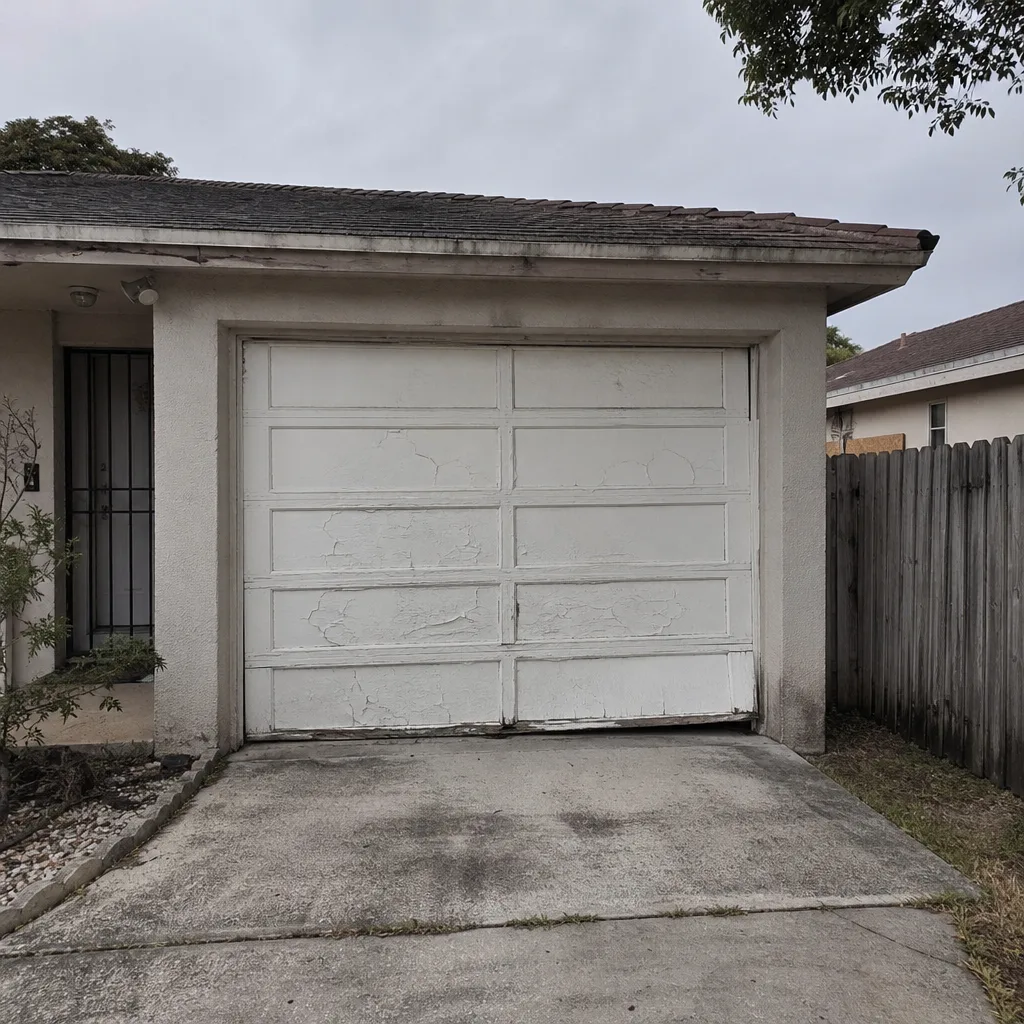 Before
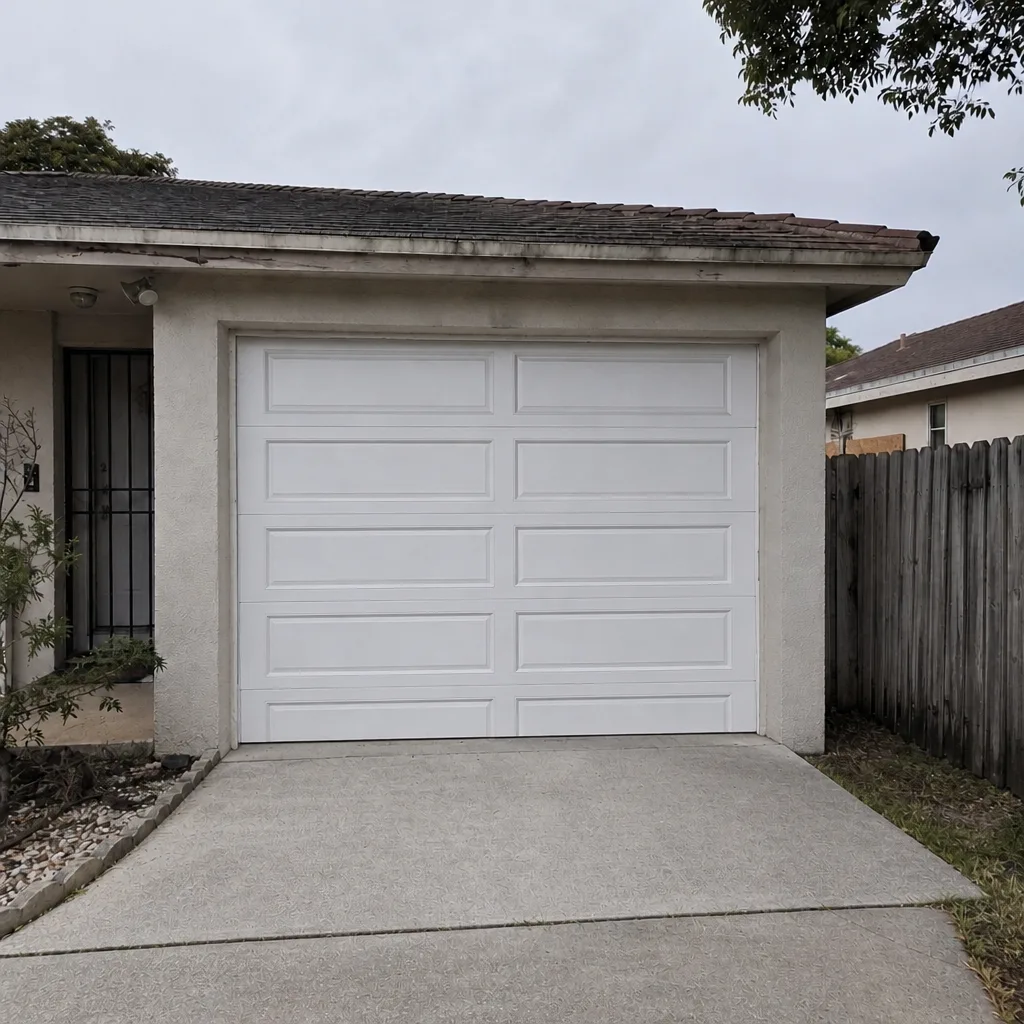 After
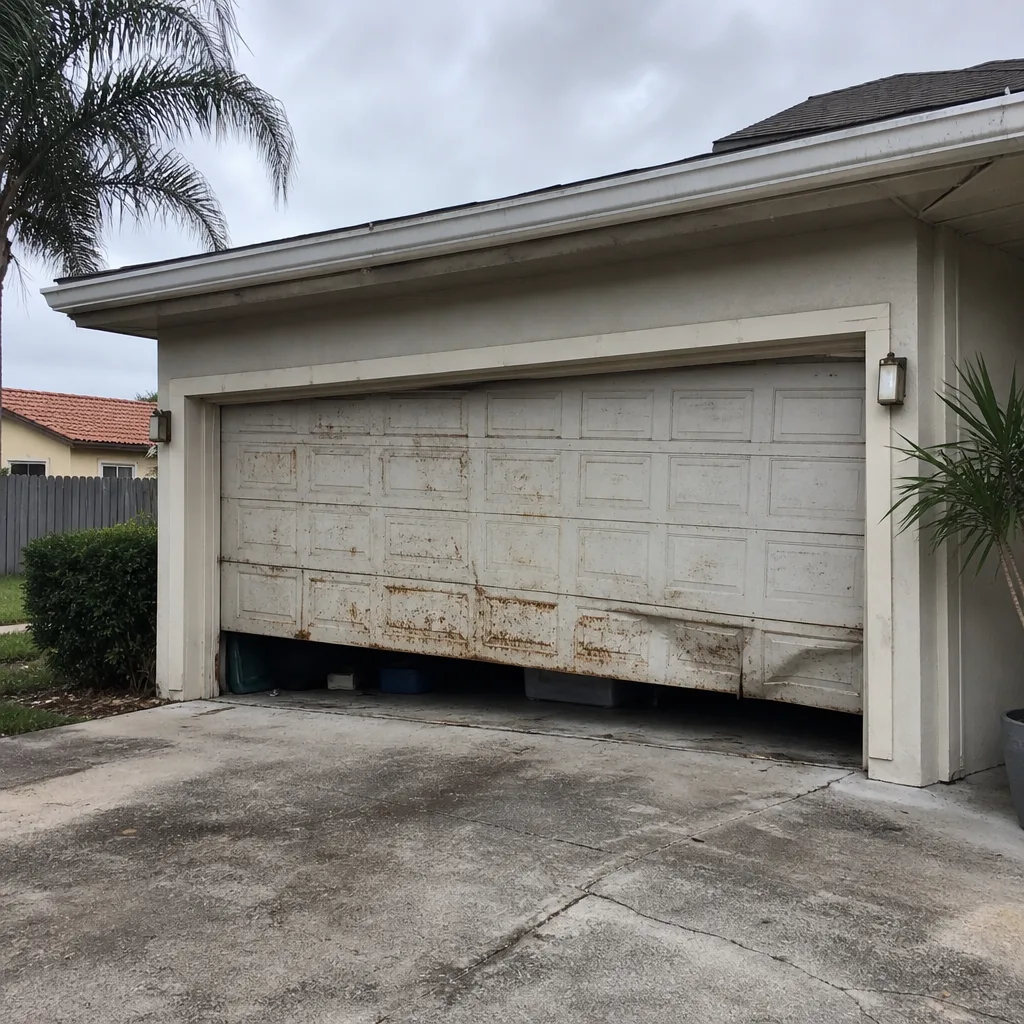 Before
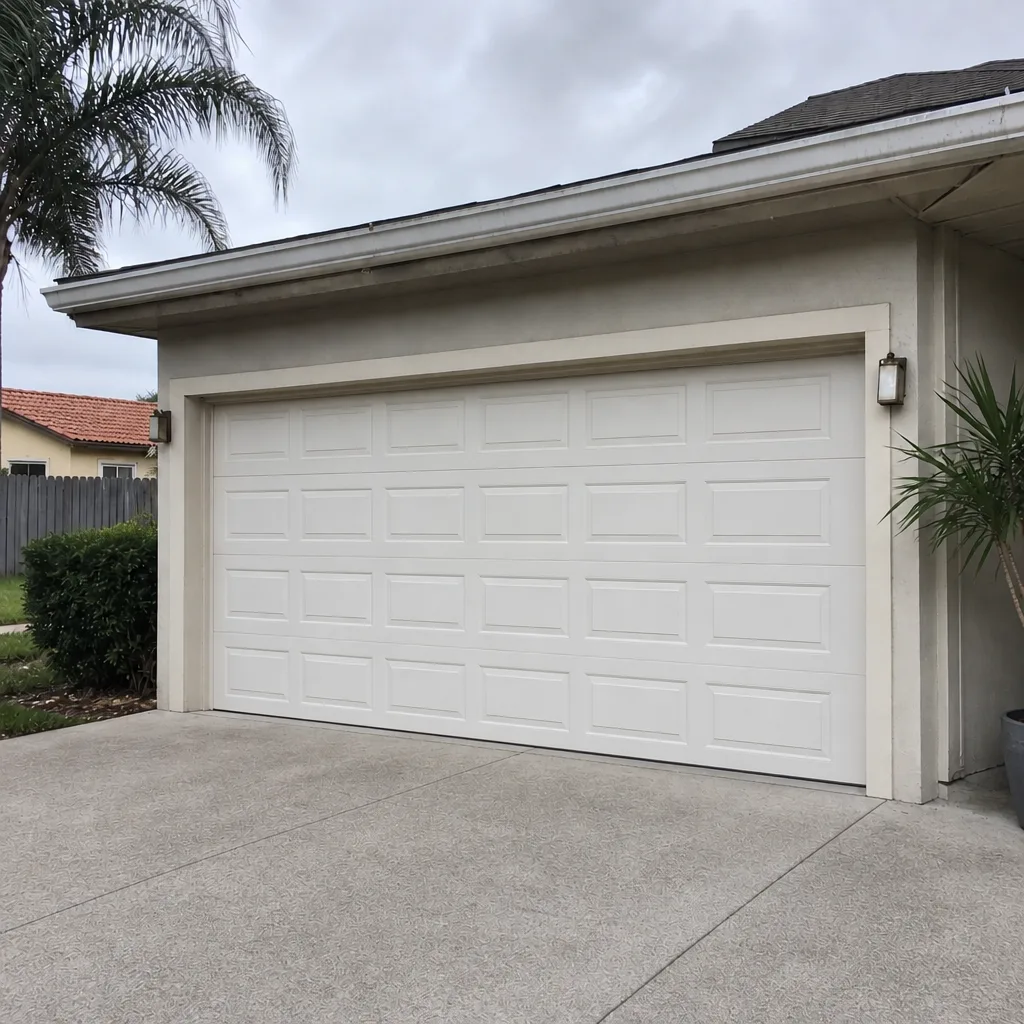 After
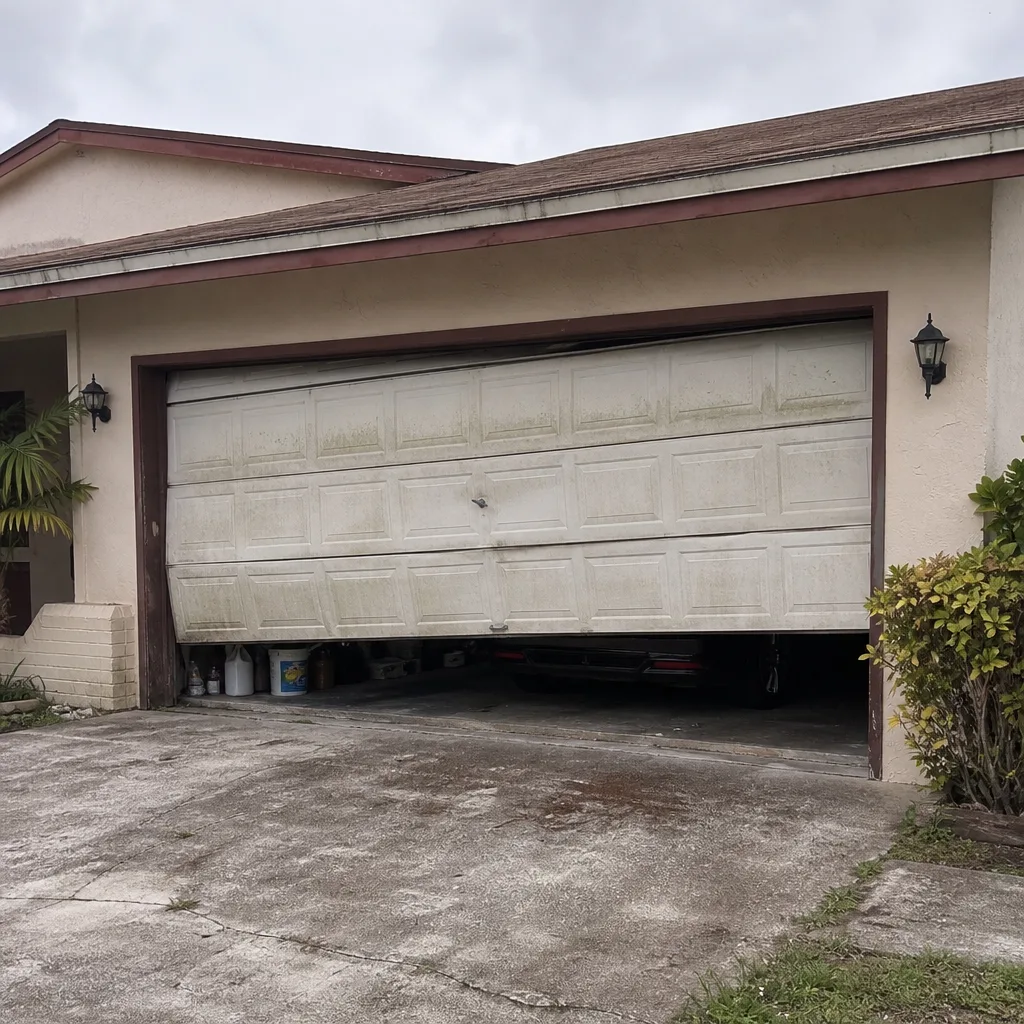 Before
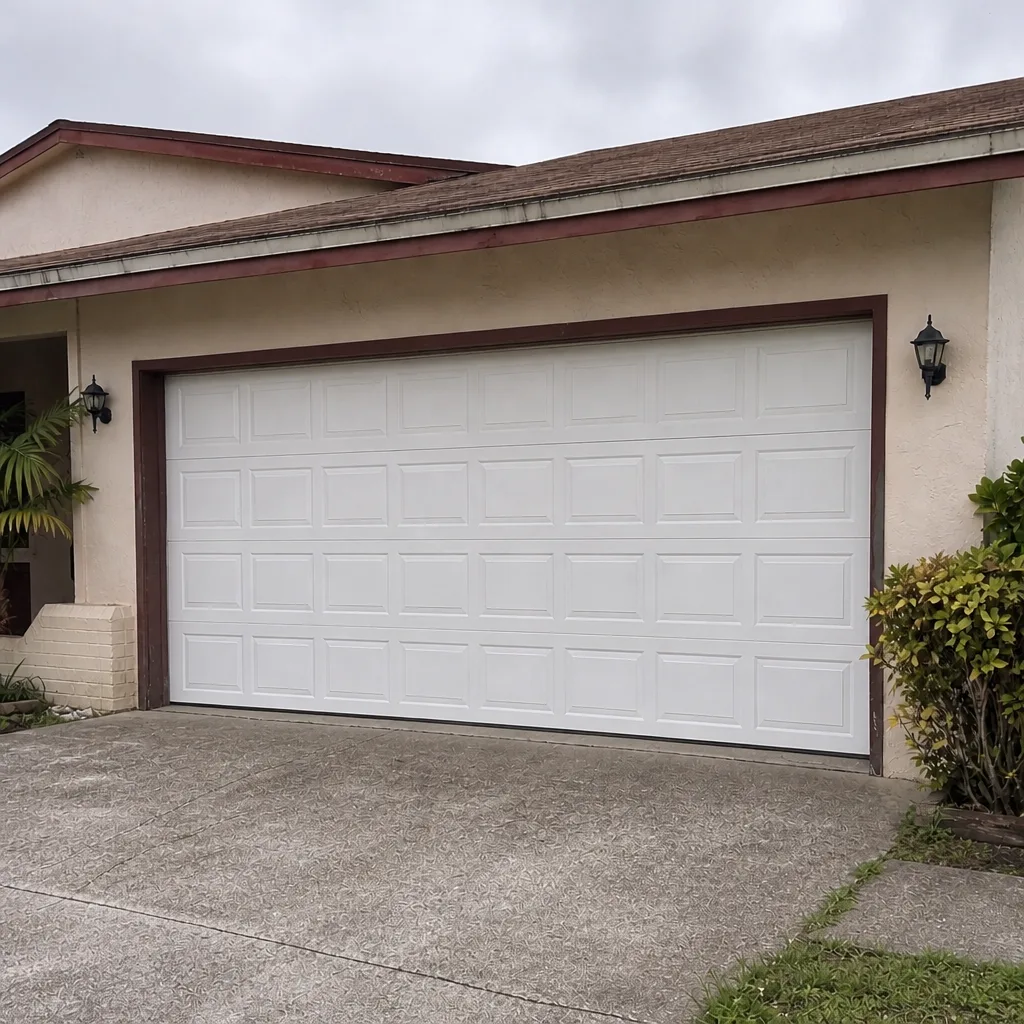 After
When to Call a Professional
Some garage door work is safe for a homeowner: lubricating hinges, cleaning tracks, testing the safety sensors, replacing a remote battery. Most of it is not. Call a professional when you hear a snap or pop, see rust concentrated on the springs, notice the door hanging unevenly, find the door off its track, or when the door won’t close at all. Also call when the opener runs but the door doesn’t move, or when a repair you’ve already made hasn’t solved the underlying symptom.
If you’re not sure whether your situation is a same-day emergency or a scheduled repair, that’s exactly the kind of question a phone call answers in a minute. Cutler Bay Garage Door Repair Pros offers free estimates in Cutler Bay. Call (877) 492-2550 and describe what your door is doing. Our technicians have up to 14 years of experience and work on all eight major brands, including LiftMaster, Chamberlain, Genie, and Raynor. Visit our spring repair page for the specific signs of spring trouble, or our opener repair page if the door’s movement is normal but the opener is the problem.
Frequently Asked Questions
The most common warning signs in Cutler Bay are a door that pauses before moving, a new grinding or popping sound, visible rust on the springs, a door that reverses on its own, and an opener that responds slowly or inconsistently. Humidity accelerates spring corrosion and stresses opener electronics, so these signs often appear earlier here than in drier climates. Any two of them together warrant a professional look. Call (877) 492-2550 for a free estimate.
A spring that’s about to break often shows a tight, concentrated rust pattern at the coil ends, a slight sag in the door on one side, and a door that feels heavier than usual when you lift it by hand with the opener disconnected. On a torsion spring, a visible gap in the coil means it’s already broken. Don’t try to test or adjust it yourself. Spring work is the most dangerous garage door repair, and it belongs to a trained technician. Call us for an inspection.
A door that stops partway usually points to a travel limit setting on the opener, a resistance problem in the tracks, or a spring that’s no longer balancing the door’s weight. The fix depends on which is causing it, and the good news is that all three are diagnosable in a single visit. Don’t keep pressing the button to see if it’ll go, because repeated stops under load put more strain on the hardware. Call (877) 492-2550 to schedule a look.
No. Torsion springs are under extreme tension and can cause serious injury if handled without the right training and tools. There’s no safe homeowner version of spring replacement, and no shortcut worth the risk. Our dedicated spring service exists precisely because this is the one garage door repair that trained technicians should handle every time. If your spring is broken, call us and we’ll handle it.
A loud pop at the start of the door’s travel is serious and usually points to a spring or cable issue. Treat a single pop as an urgent inspection, and stop operating the door until it’s been looked at. If the door is still working after a pop, it may be working under compromised hardware, which is a risk to anyone standing nearby. Call (877) 492-2550 for a same-day assessment.
Yes. The combination of warmth and humidity means metal parts are working against moisture year-round, and garage spaces in Cutler Bay tend to hold humidity longer than the outside air. Springs corrode faster, hinges and rollers dry out more often, and opener circuit boards face more stress than in a drier climate. Checking your door twice a year and after heavy rain catches most problems early. Call (877) 492-2550 if you’d like a professional inspection.
For most Cutler Bay homes, a professional check twice a year is a reasonable baseline, plus a quick visual inspection after any stretch of heavy rain or a storm. High-use doors (a two-car household, or a door that opens several times a day) may benefit from more frequent service. The goal is to catch small wear before it becomes a spring or opener failure. Call (877) 492-2550 for a free estimate on a service visit.
The Bottom Line
Warning signs are your door’s way of asking for help before it fails. The ones that matter most in Cutler Bay are a door that hesitates, a new noise, rust on the springs, and an opener that responds inconsistently. Two or more of those signs together is a call-a-professional situation, and a loud pop, an off-track door, or a door that won’t close is an emergency. The right habit is simple: pay attention to your door’s sound and movement, check the hardware after storms, and treat humidity as a real factor in the maintenance schedule. That’s how you avoid being the homeowner with a broken spring the night before a storm.
If you’re in Cutler Bay and your door is showing any of these signs, don’t wait for it to stop working. Call (877) 492-2550 for a free estimate. We work on all eight major garage door and opener brands, including LiftMaster, Chamberlain, Genie, and Raynor, and our technicians have up to 14 years of experience. For the full range of what we do, start at Cutler Bay Garage Door Repair Pros, and if you’re ready to schedule spring work, our spring repair page has the details. One call, one specialist, from a broken spring to a brand-new door.
Written by the team at Cutler Bay Garage Door Repair Pros.