Last updated November 22, 2026
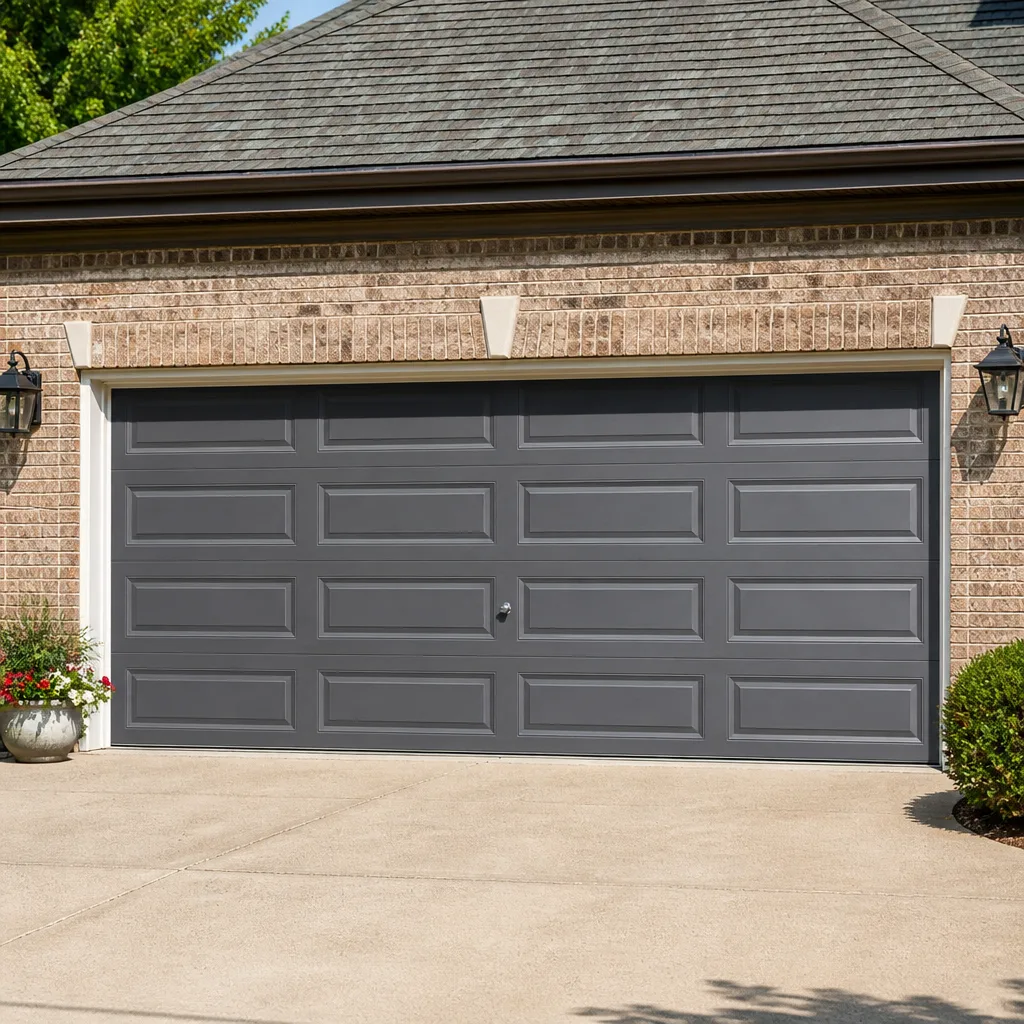 Raised-panel steel
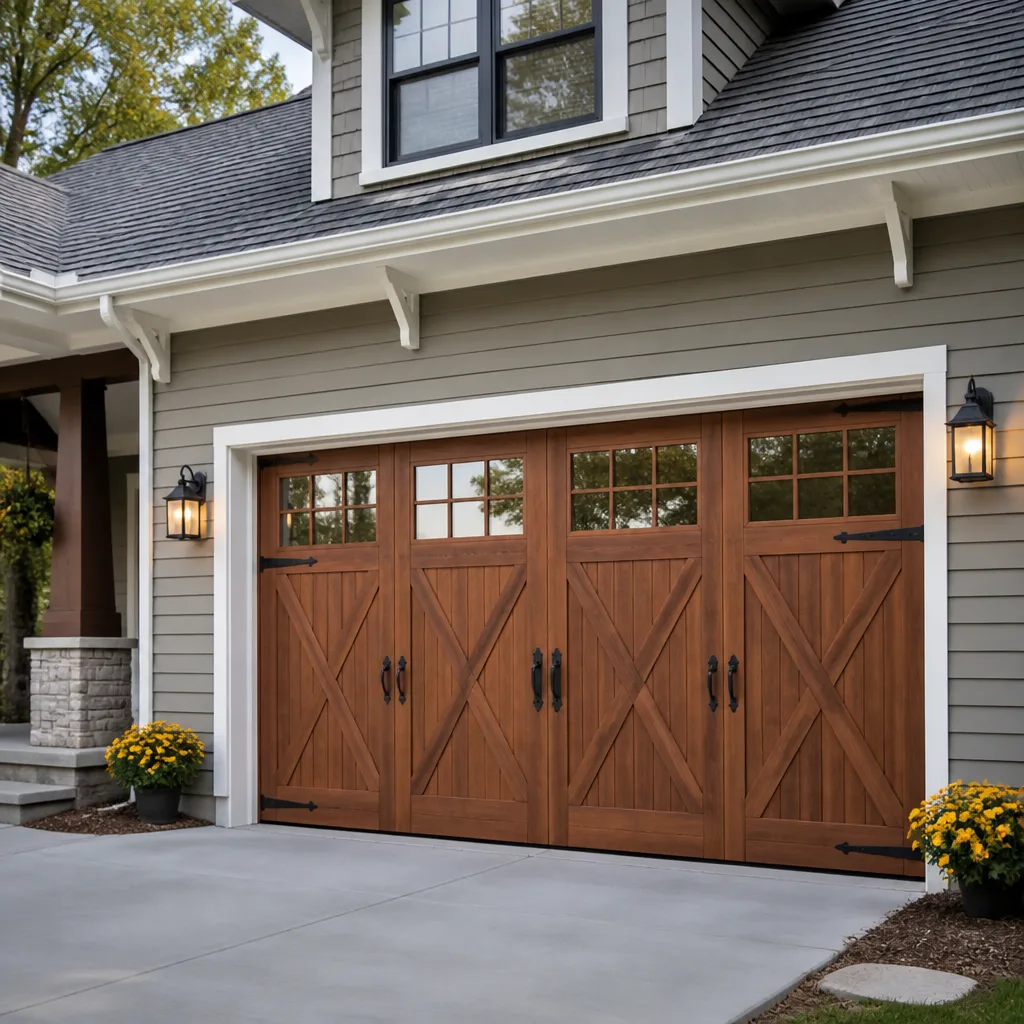 Carriage house
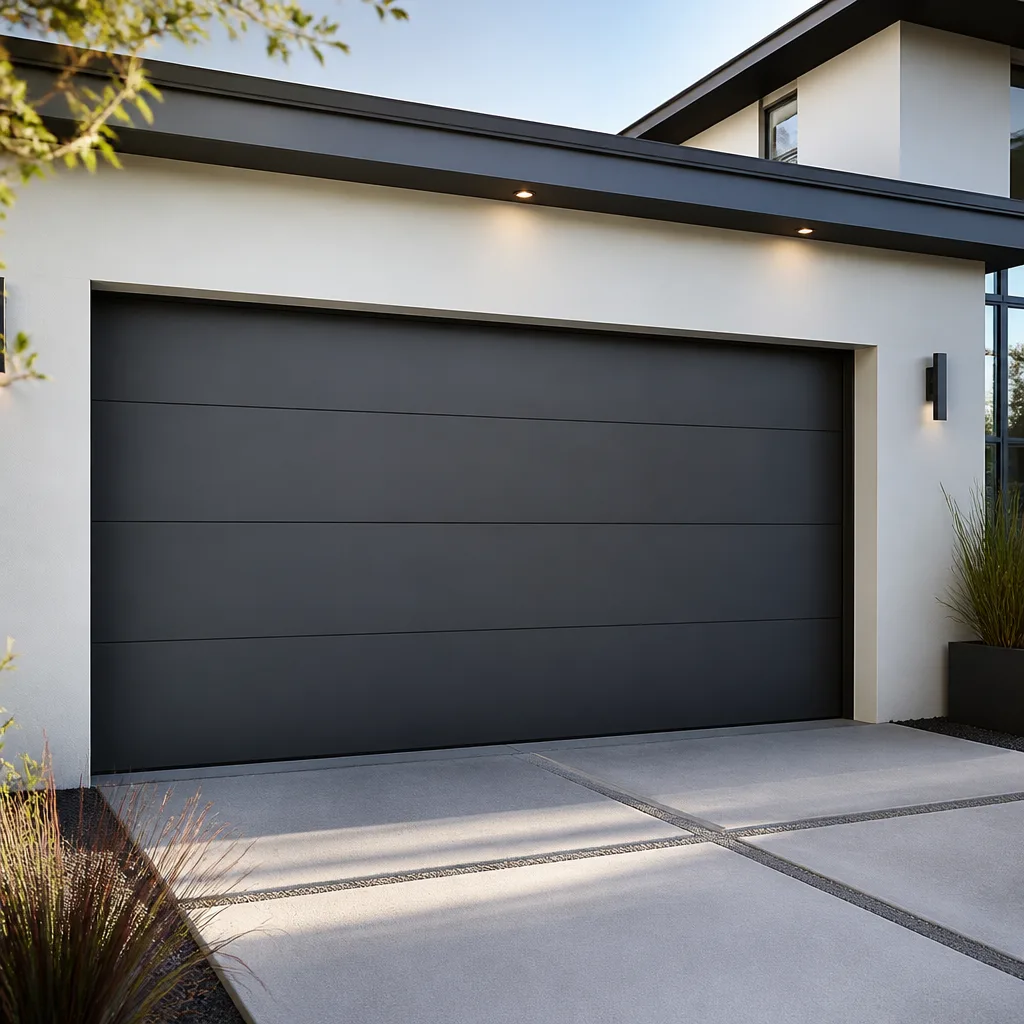 Modern flush
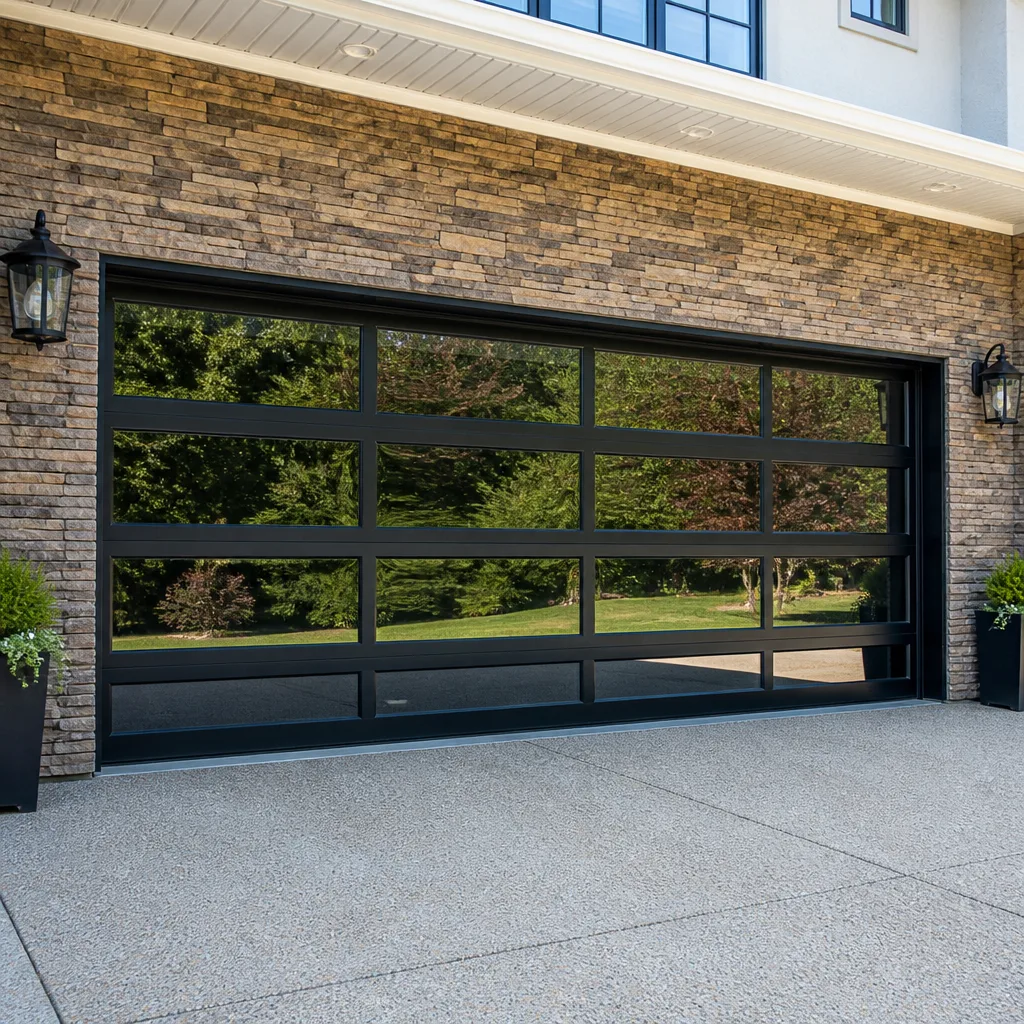 Full-view glass
 LiftMaster openers
 Chamberlain openers
Full 25-point door and opener safety check with every visit - springs, cables, rollers, tracks, and your LiftMaster or Chamberlain opener included
You get a price before we start. It does not change when the pro arrives.
Get your free estimateGarage Door Emergency Preparedness Guide for Cutler Bay Homes
Most people assume a garage door emergency means a broken spring or a dead opener. In Cutler Bay, that’s only half the story. A garage door is the largest opening in most homes, and it’s the part of the house that takes the hardest hit when a storm rolls in off Biscayne Bay. A door you can’t close is an open doorway the wind can push against, and that changes everything about how you should prepare. This guide covers both kinds of emergency: the mechanical failure at midnight and the storm scenario where your door becomes the weak point. You’ll get the manual override for every common opener, a wind-speed threshold for shutting down the automatic opener, temporary ways to secure a stuck door, a parts kit built for Cutler Bay homeowners, and a script for triaging an emergency call so you aren’t left waiting.
Quick Answer
A garage door emergency in Cutler Bay falls into two categories: mechanical failure (broken spring, snapped cable, dead opener, door stuck open) and storm emergency (a door that can’t be closed before a system arrives). For mechanical failures, pull the manual release cord to disengage the opener, secure the door, and call for same-day service. For storm emergencies, stop using the automatic opener when sustained wind forecasts reach tropical-storm force, disconnect the door, and brace it manually. Call (877) 492-2550 for emergency garage door service in Cutler Bay.
Styles & brands we work with
- Raised-panel steel
- Carriage house
- Modern flush
- Full-view glass
- LiftMaster openers
- Chamberlain openers
Table of Contents
- The Two Kinds of Garage Door Emergencies in Cutler Bay
- Manual Override: What to Do When the Power Is Out
- The Storm Emergency Protocol for Cutler Bay
- How to Safely Secure a Door Stuck in the Open Position
- What to Have on Hand: The Cutler Bay Emergency Kit
- Who to Call and What to Say
- Preventive Checks Before the Season Turns
- When to Call a Professional
- Frequently Asked Questions
The Two Kinds of Garage Door Emergencies in Cutler Bay
We’ve seen the word “emergency” used loosely in this trade, so let’s be precise. A garage door emergency is any situation where the door can’t move safely, can’t close fully, or can’t be secured, and where waiting a day or two makes the problem worse. In Cutler Bay that breaks into two very different types of failure, and they call for different responses.
The first is mechanical. A torsion spring snaps, a lift cable frays and lets go, an opener motor burns out, or a door comes off its track and jams halfway. These failures usually happen without warning and leave the door in whatever position it was when the part gave out. If it stopped while open, the house is exposed. If it stopped while closed, you may not even know until you try to leave.
The second is storm-driven. Cutler Bay sits in a region where summer systems can build up quickly, and the door becomes a structural concern rather than a mechanical one. An intact, properly rated door helps hold the envelope of the house together. A compromised door, whether it’s off its track or just old and loose, is the first thing wind gets behind. The two emergencies overlap more than most homeowners expect: a door that’s been running rough all spring is the door most likely to fail when you need it to close.
Understanding which situation you’re in decides everything that follows. A broken spring is dangerous to touch. A storm on the way is a timed problem. Both need a plan you’ve already thought through, not one you invent at 11pm with a flashlight. If the door is already down and the problem is mechanical, our garage door repair team can triage it the same day.
Manual Override: What to Do When the Power Is Out
Every residential garage door opener has a manual release, and knowing where yours is before you need it is the single most useful piece of preparation you can do. The release is a cord, handle, or lever hanging from the opener trolley on the rail above the door. Pulling it disconnects the door from the motor so you can lift it by hand. That’s the short answer. The detail matters more than the cord.
Step-by-step override for a standard opener
- Make sure no one is standing under the door and the doorway is clear.
- Locate the release cord on the trolley. On most LiftMaster and Chamberlain units it hangs straight down with a red or black handle.
- Pull the cord firmly downward and slightly toward the door. You should feel the trolley release.
- Lift the door slowly by hand using the bottom section, or use the emergency key if your door has an outside disconnect.
- Once the door is where you want it, prop or brace it so it can’t fall. A door with a broken spring will not stay up on its own.
- When power returns, re-engage the trolley by running the opener until it reconnects, or by following the reset procedure for your model.
Craftsman and Genie openers use the same basic release mechanism, though the cord placement differs slightly. If your opener is a wall-mount jackshaft style, the release is typically a lever on the side of the unit rather than a hanging cord. When in doubt, look for the handle, not the button.
A caution we take seriously: the manual release disconnects the door from the motor, but it does not make a broken spring safe. A torsion spring under tension can release violently. Never try to lift, adjust, or remove a spring or cable yourself. Leave that to a trained technician, which is exactly why our garage door spring repair service exists as a dedicated offering.
The Storm Emergency Protocol for Cutler Bay
Here’s the question we get most often from Cutler Bay homeowners as a system approaches: when should I stop using the opener and start handling the door by hand? The practical answer is to treat the door as a manual operation the moment a tropical-storm-force wind forecast is on the table, generally sustained winds in the 39 mph range and climbing. Above that, automatic operation is a liability, not an asset, because a door that fails mid-cycle under load can leave you with a jammed panel you can’t close at all.
Our recommended protocol, in order:
- Before the system arrives. Close the door completely and let it seat. Confirm the bottom seal is touching the floor with no gaps.
- Disengage the opener. Pull the manual release so the motor can’t cycle the door. If power flickers, the door won’t try to move.
- Make sure the door is fully latched or braced. A door that seats but doesn’t latch can be pushed inward. Check that any slide bolts or interior braces are engaged.
- Keep the vehicle out of the garage while the storm passes. This keeps the door from being asked to open until conditions ease.
- After the storm. Inspect for bent panels, popped hinges, or a door that’s shifted off the track before you re-engage the opener.
If the door cannot be closed electrically because the opener has failed or the track is jammed, don’t force it with the remote. Force it by hand and brace it. A manually secured door is far safer than one being cycled repeatedly against a jam. If the door simply refuses to close, our emergency garage door service exists for exactly this scenario in Cutler Bay.
How to Safely Secure a Door Stuck in the Open Position
A door stuck open overnight is the situation that makes people call at midnight. The plan is not to fix it in the dark. The plan is to secure it until a technician can arrive. Here’s what actually works.
- Disengage the opener first. Pull the manual release so the door can’t try to cycle and cause a jam or injury.
- Use manual clamps or locking pliers on the track. Clamp a pair of locking pliers on the vertical track just below the bottom roller on each side. This physically stops the door from sliding down if it slips.
- Brace the door from the inside with a sturdy board or 2×4 cut to fit. Wedge it under the bottom section so it bears weight. Never stand under the door while you do this.
- If the door needs to be closed for security, ask a trained technician to manually lower it. A door with a broken spring is heavy and can drop without warning. Do not lower it yourself.
- Secure the space behind the door. Lock the entry door between the garage and the house so the open garage doesn’t become an open home.
We’ve seen the temporary clamp approach hold doors for days while parts were ordered. It isn’t a repair. It’s a gate until a technician can get in and do the job properly. If you’re not comfortable with the clamps and bracing, don’t improvise. Call and describe the door’s position, and we’ll walk you through what’s safe for your specific setup.
What to Have on Hand: The Cutler Bay Emergency Kit
A small, cheap kit saves a lot of damage. These are the items worth keeping in a labeled bin or drawer near the garage entry. Nothing here replaces a technician, but each item buys you time and safety when the door misbehaves.
- Manual release knowledge. Not a part, a habit. Know exactly where your cord is and what it feels like when it disengages. Show every adult in the house.
- A backup battery for your opener. Many modern LiftMaster and Chamberlain openers accept a battery backup that lets the door cycle once or twice when the power drops. Check your model’s compatibility before you buy.
- Locking pliers or track clamps. Two pairs, one for each side of the track.
- A short 2×4 or cut board. Sized to wedge under the bottom section as a brace.
- A bright flashlight and spare batteries. Battery-powered, not phone-flashlight only.
- A replacement bottom seal kept in the garage. A cracked seal lets water and wind in, and in a Cutler Bay summer it’s the first thing to go. Keep a section on hand.
- Your opener model number and brand written on a card. LiftMaster, Chamberlain, Craftsman, Genie, Raynor, Clopay, Amarr, or Wayne Dalton. It’s the first thing a technician needs.
If your opener is an older unit without battery backup, that’s worth noting. It’s not a safety failure, but it does mean an outage takes the door offline. Our garage door opener repair team can tell you whether a backup upgrade is practical for your model.
Who to Call and What to Say
The difference between getting a fast response and being told “we’ll fit you in” comes down to how you present the call. Emergency garage door service is a real, named offering, but the company on the other end needs to understand what’s actually wrong before they can prioritize. Here’s how to make that easy.
Before you dial, know five things:
- What the door is doing. Stuck open, stuck closed, jammed mid-travel, won’t respond to the remote, making a snapping sound.
- What part failed, if you can tell. Spring, cable, track, opener, or nothing obvious.
- The brand of the door and opener. LiftMaster, Chamberlain, Craftsman, Genie, Raynor, Clopay, Amarr, Wayne Dalton.
- The approximate age of the door and opener. Not a precise date, just years.
- Whether the door is currently safe. Is it braced, clamped, closed? Is anyone at risk?
Then say it in that order. “My door is stuck open, the spring looks broken, it’s a Raynor door with a Genie opener, about twelve years old, and I’ve clamped the track so it’s not moving.” That single sentence gives the dispatcher enough to know it’s a spring job, which determines crew, parts, and timing. Vague calls get sorted to the bottom because they can’t be matched to a job type.
Two more things worth stating directly: confirm that emergency service is available for the evening or early morning if the door can’t be secured, and ask for a callback window rather than a promise. A real emergency offering will give you both. When the door won’t move, we move fast, and the clearer you are, the faster we can help.
Preventive Checks Before the Season Turns
The best emergency is the one you prevent. Cutler Bay’s climate means your door works harder in heat and humidity than in a mild inland town, and heat expands and contracts metal and stretches seals. A few checks a couple of times a year go a long way toward keeping the door functional when you need it most.
- Listen to the springs. A torsion spring that’s near failure often makes a sharper, higher-pitched sound as it cycles. If the sound changed, get it looked at.
- Check the balance. Disengage the opener and lift the door halfway. It should stay there. If it drops or is very hard to lift, the springs need attention.
- Look at the cables. Any fraying, kinking, or rust is a red flag. Cables can snap without warning.
- Test the safety reverse and photo-eye. Place a small object in the door’s path and confirm the door reverses. Check that the photo-eye lenses are clean and aligned.
- Inspect the bottom seal. A cracked or hardened seal lets in water and wind. This is the cheapest preventive part you can replace.
- Try the manual release. Once a year, pull the cord and confirm it works smoothly, then re-engage. You don’t want to discover it’s stuck when you need it.
Do these checks in spring and again in early fall, before storm season builds. Most of the emergencies we get called for show warning signs weeks earlier. If you’re not sure what you’re looking at, a quick inspection is cheaper than an emergency call.
See the difference
 Before
 After
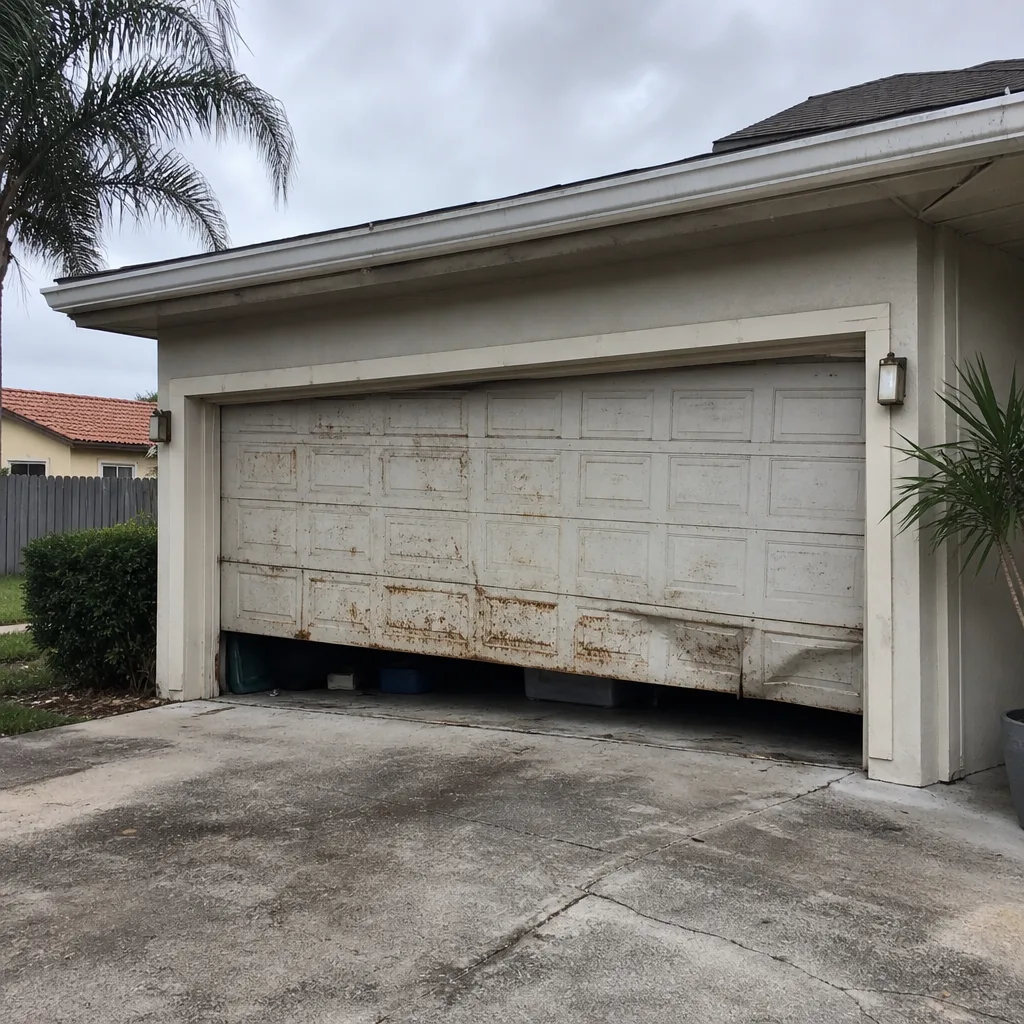 Before
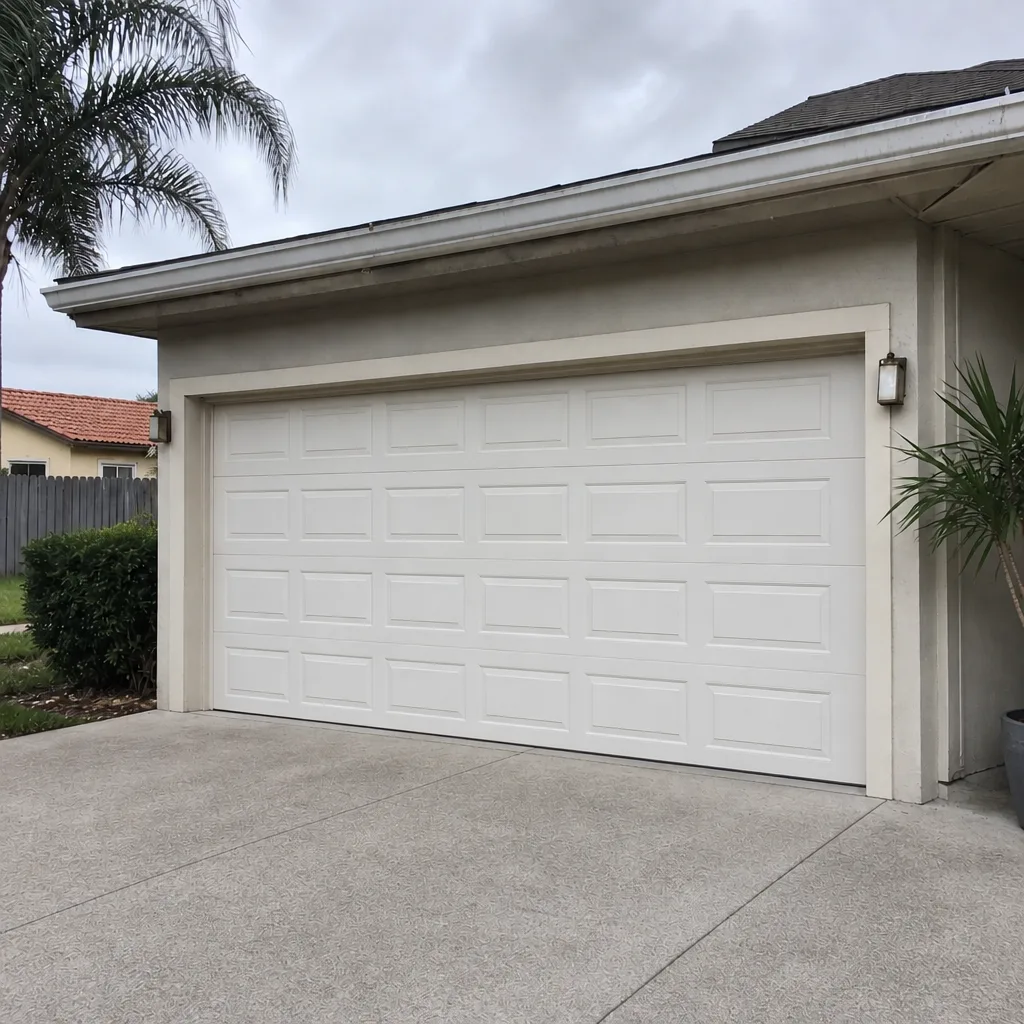 After
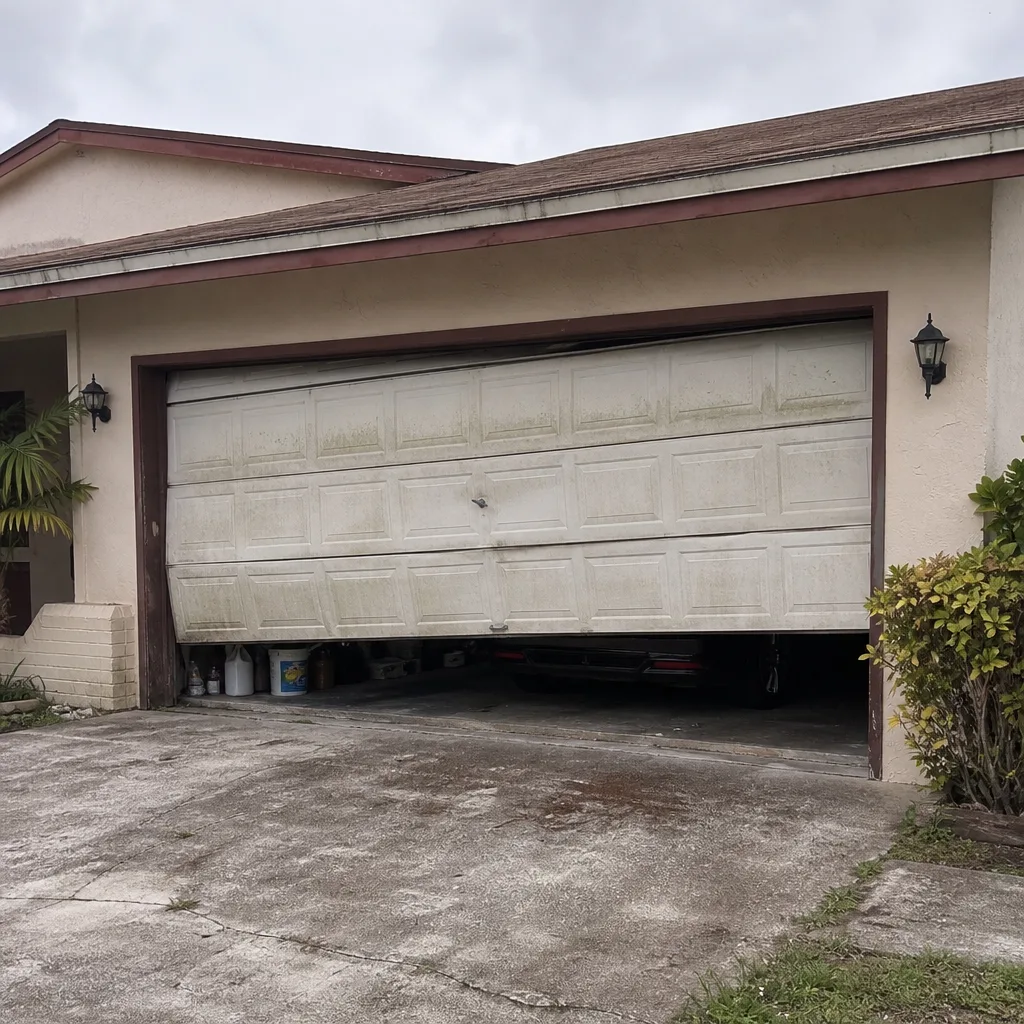 Before
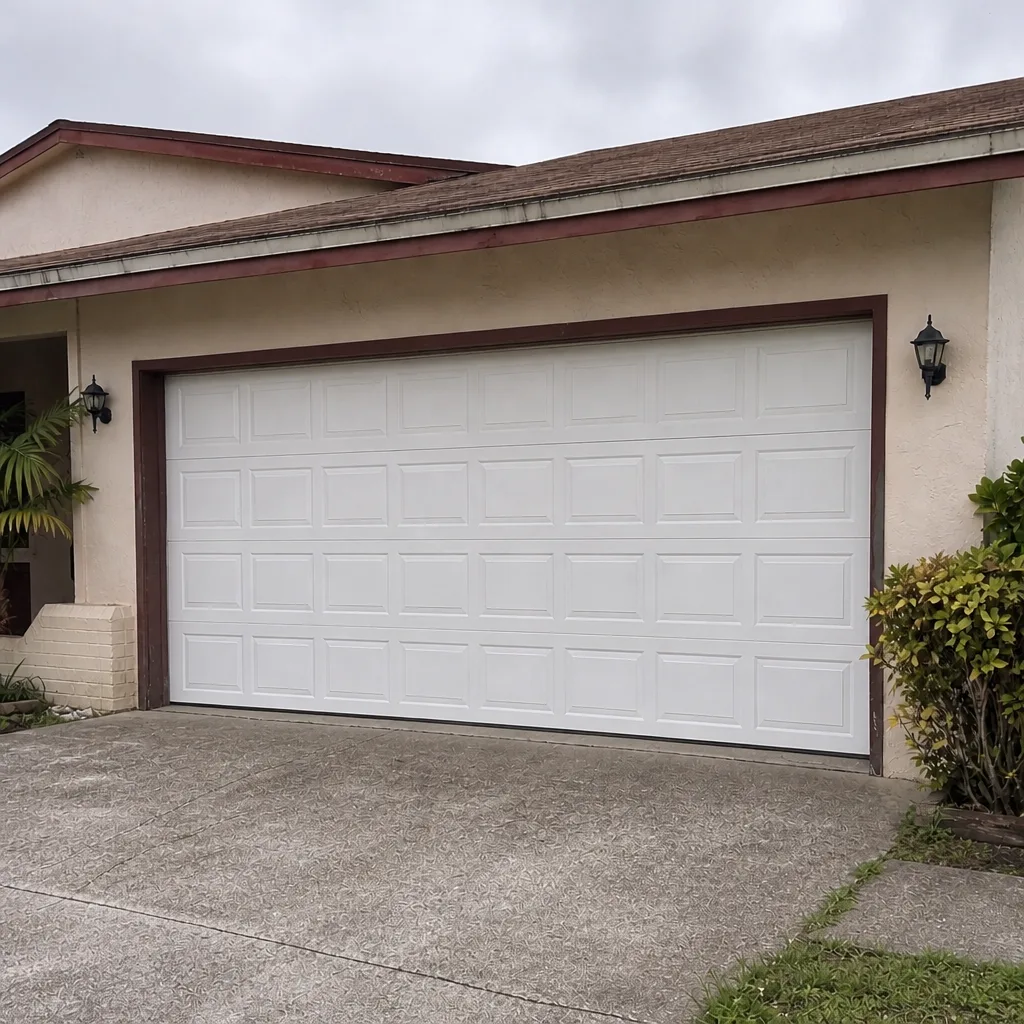 After
Common Mistakes to Avoid
- Pulling the manual release while the door is under tension from a broken spring. The door can drop. Disengage only when the door is closed or you’ve braced it. This is the mistake most often behind injuries.
- Force-lifting a door that’s off its track. You’ll bend the panels and turn a repair into a replacement. If the door is jammed, stop and call.
- Assuming the opener is the problem when it’s the spring. A dead opener and a broken spring feel similar from the remote. Check for a visible gap in the spring before you order a new opener.
- Cycling the door repeatedly during a storm to test it. Each cycle is a chance to fail mid-travel. Disconnect the opener and leave the door alone.
- Standing under a stuck-open door to “have a look.” An unbraced door can fall without warning. Secure it, then look at it from a safe distance.
- Buying a replacement opener before confirming brand compatibility. LiftMaster and Chamberlain accessories don’t swap freely, and older Craftsman and Genie units need specific parts. Check the model first.
- Calling an emergency line without knowing the door’s current position. “It’s broken” gets you a callback. “Stuck open with the track clamped” gets you dispatched.
When to Call a Professional
Call a professional for anything involving a spring, a cable, a track out of alignment, or an opener that won’t respond after a reset. Spring and cable work is genuinely dangerous. The stored energy in a torsion spring can cause serious injury in a fraction of a second, and there’s no safe homeowner workaround. Call the same day for a door stuck open, off its track, or jammed mid-travel. Call before a storm if the door is running rough, and call an emergency line if the door can’t be closed or secured. Cutler Bay Garage Door Repair Pros offers free estimates in Cutler Bay. Call (877) 492-2550 and we’ll help you figure out what’s safe to do right now and what needs a technician.
Frequently Asked Questions
Pull the manual release to disconnect the opener, clamp locking pliers on the vertical track below the bottom roller on each side, and brace the door from the inside with a sturdy board. Don’t try to force it closed if a spring is broken. Then call for emergency service. Call (877) 492-2550 for an exact quote – estimates are free.
Stop using the automatic opener when a tropical-storm-force wind forecast is on the table, generally sustained winds near 39 mph and climbing. Disengage the opener and secure the door manually before conditions build. Force-cycling a door under wind load is how panels jam.
Yes. Every residential opener has a manual release cord on the trolley above the door. Pull it firmly downward, then lift the door by hand. Note that a door with a broken spring is heavy and will not stay up without a brace, so never open one by hand if you suspect a spring failure.
Most emergency repairs fall in a modest range determined by the failed part and the time of the call, and the written estimate sets the final price before any work starts. Spring, cable, and opener jobs are each priced separately. Call (877) 492-2550 for an exact quote – estimates are free.
Emergency garage door service is a committed offering, so call and describe the situation clearly. A door stuck open with the track clamped is triaged as an emergency. Call (877) 492-2550 for an exact quote – estimates are free.
No. The written estimate sets the price before any work starts. We confirm the scope, quote it, and only proceed once you agree. Call (877) 492-2550 for an exact quote – estimates are free.
The local professional who performs the work is licensed and insured as their state requires. Our technicians have up to 14 years of experience. Call (877) 492-2550 for an exact quote – estimates are free.
The Bottom Line
Cutler Bay garage door emergencies come in two forms, and preparing for both is the point. For the mechanical kind, know your manual release, keep a small kit near the garage, and never touch a spring or cable. For the storm kind, stop the opener early, secure the door manually, and inspect before you re-engage. The common thread is preparation done before you need it. One call, one specialist, from a broken spring to a brand-new door, and a clear plan either way. If your door is failing now, or you want to get ahead of the next storm, call (877) 492-2550 for a free estimate in Cutler Bay.
Written by the team at Cutler Bay Garage Door Repair Pros.