Last updated November 22, 2026
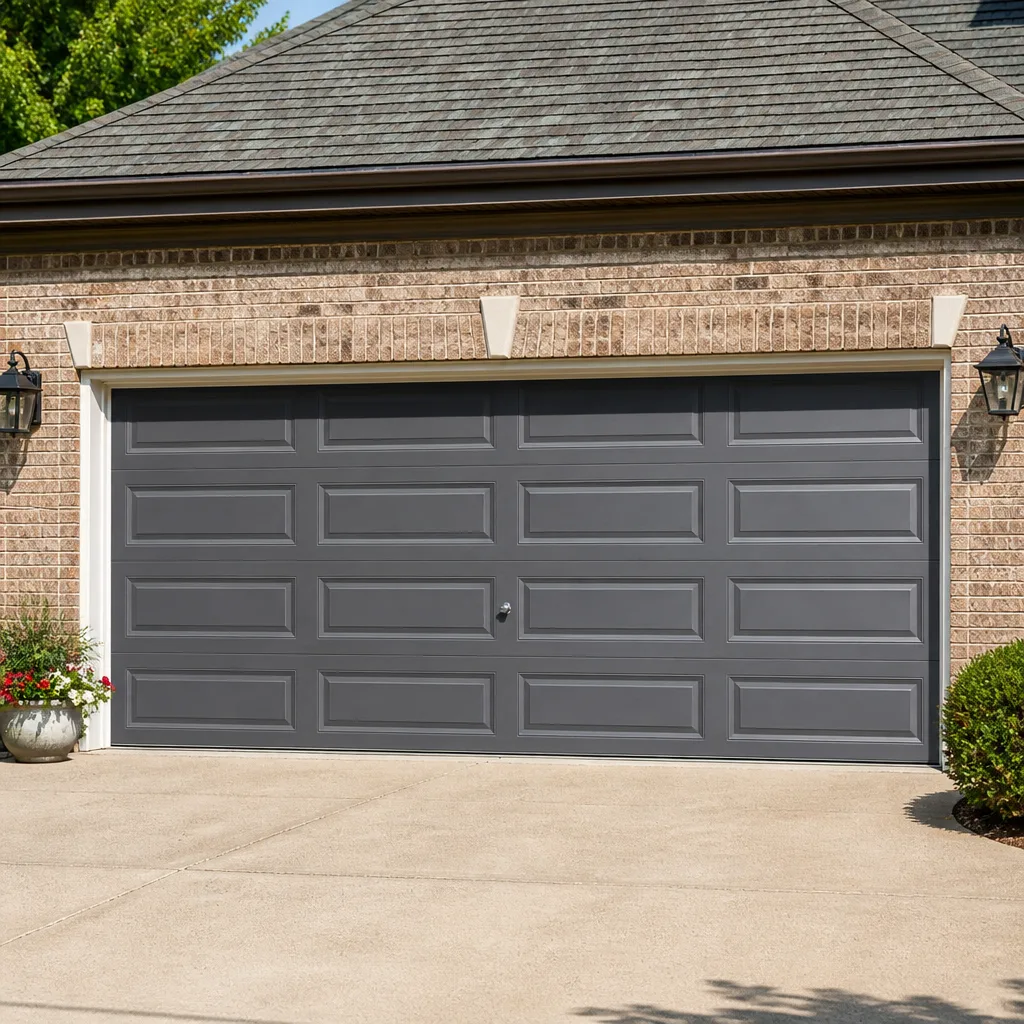 Raised-panel steel
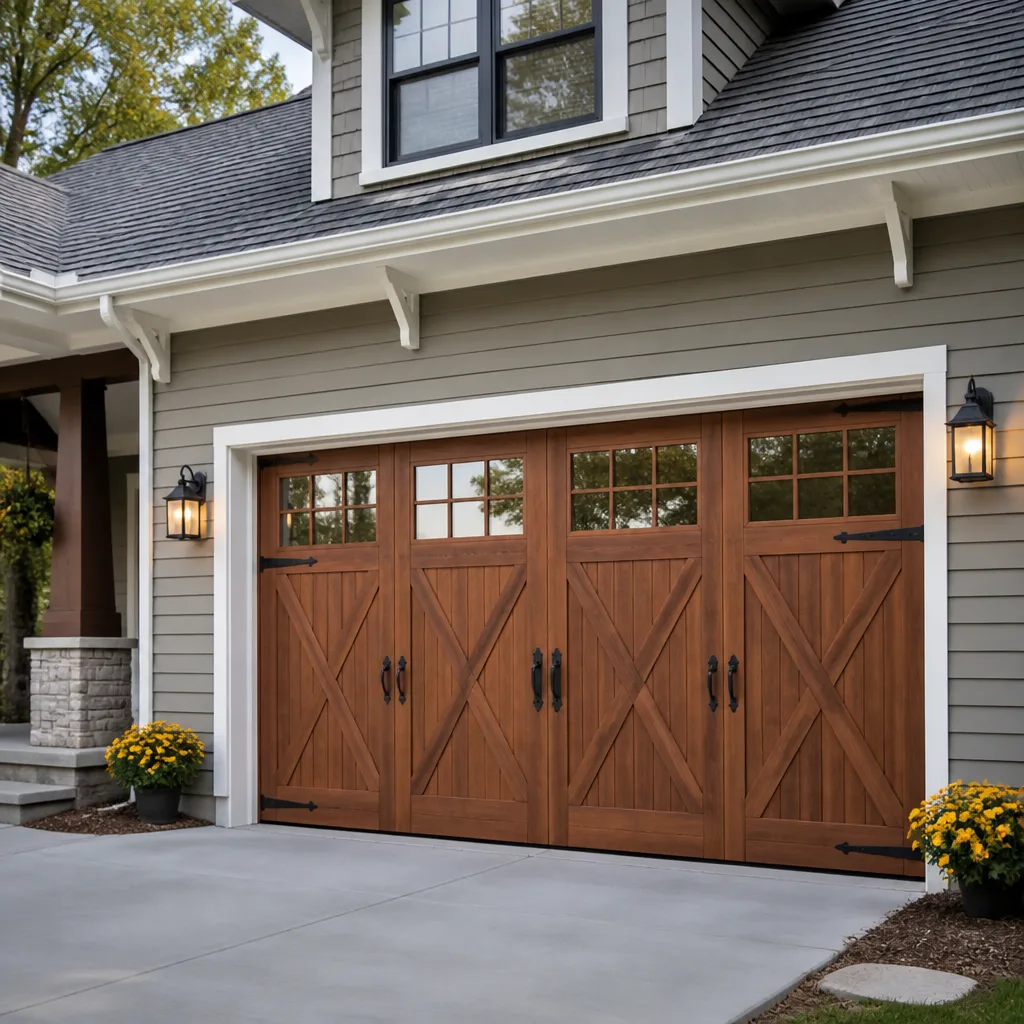 Carriage house
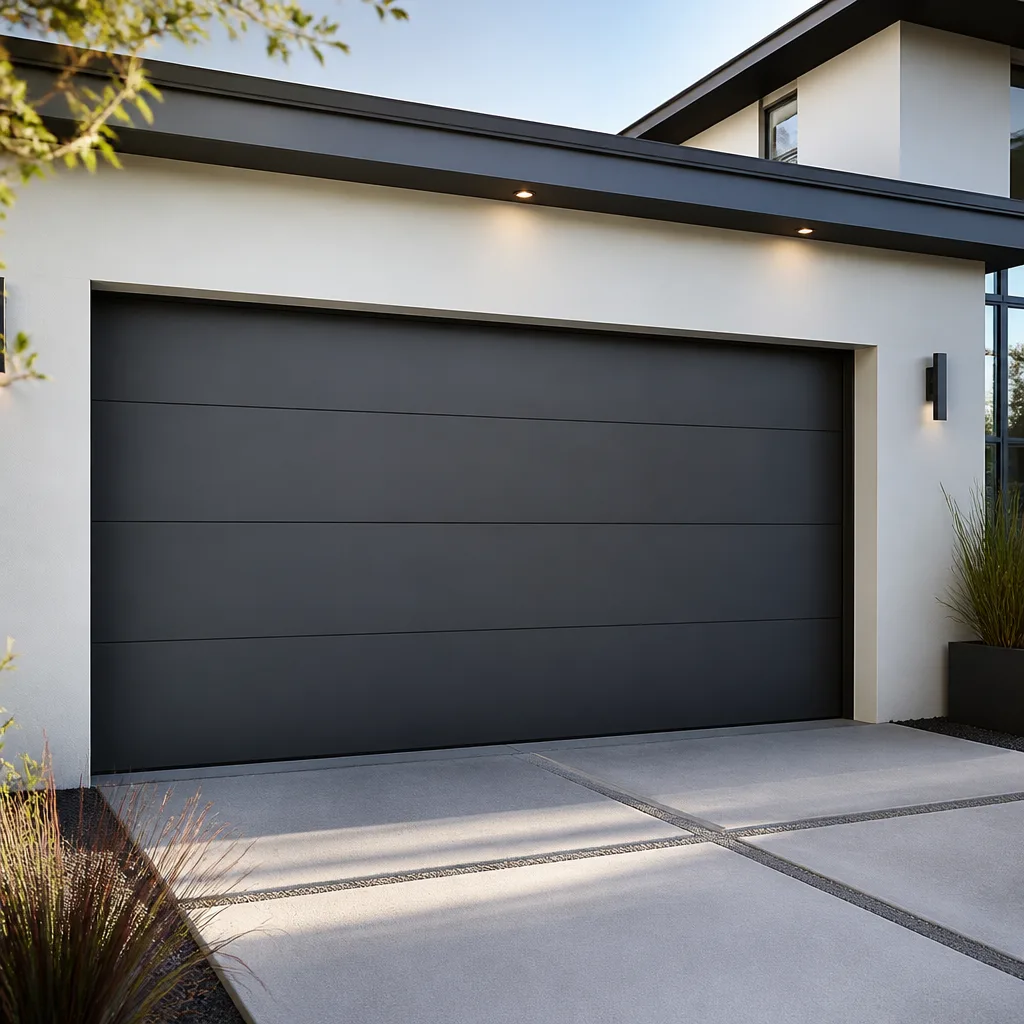 Modern flush
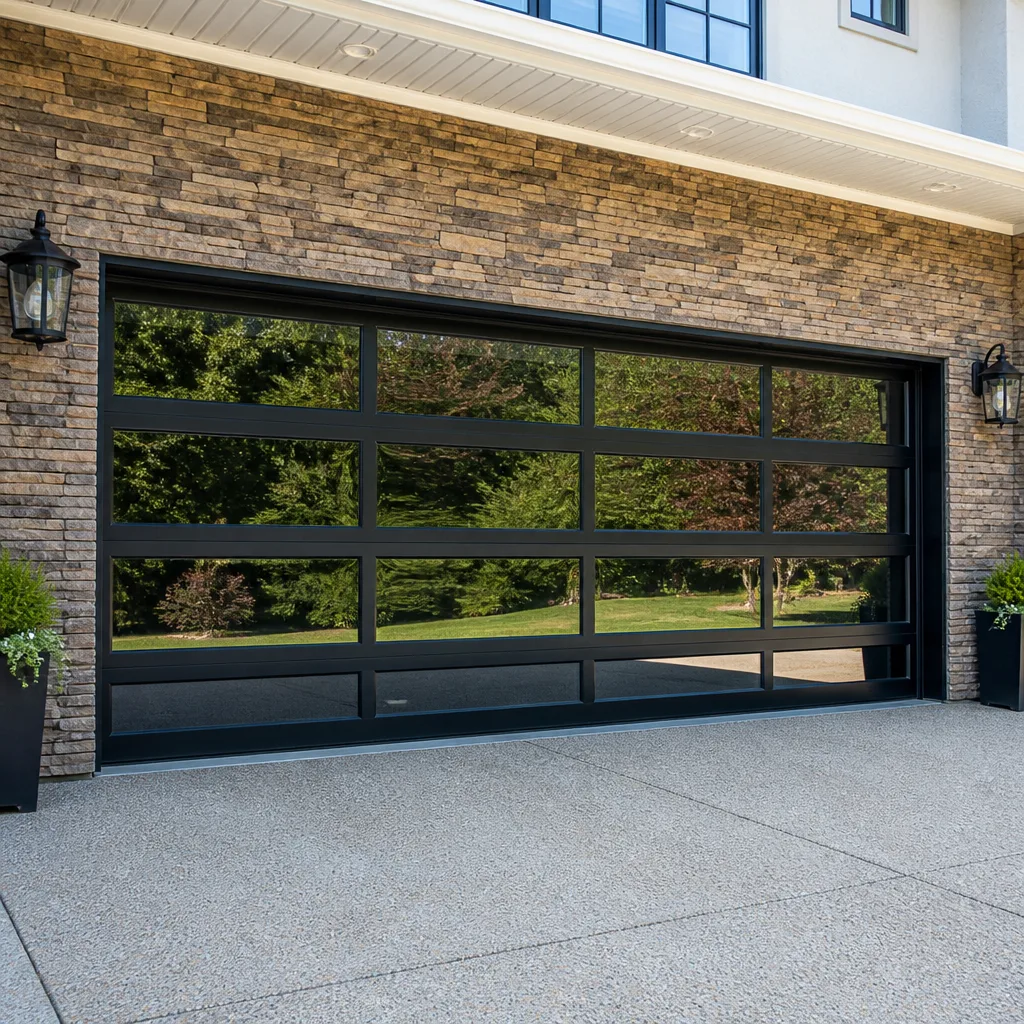 Full-view glass
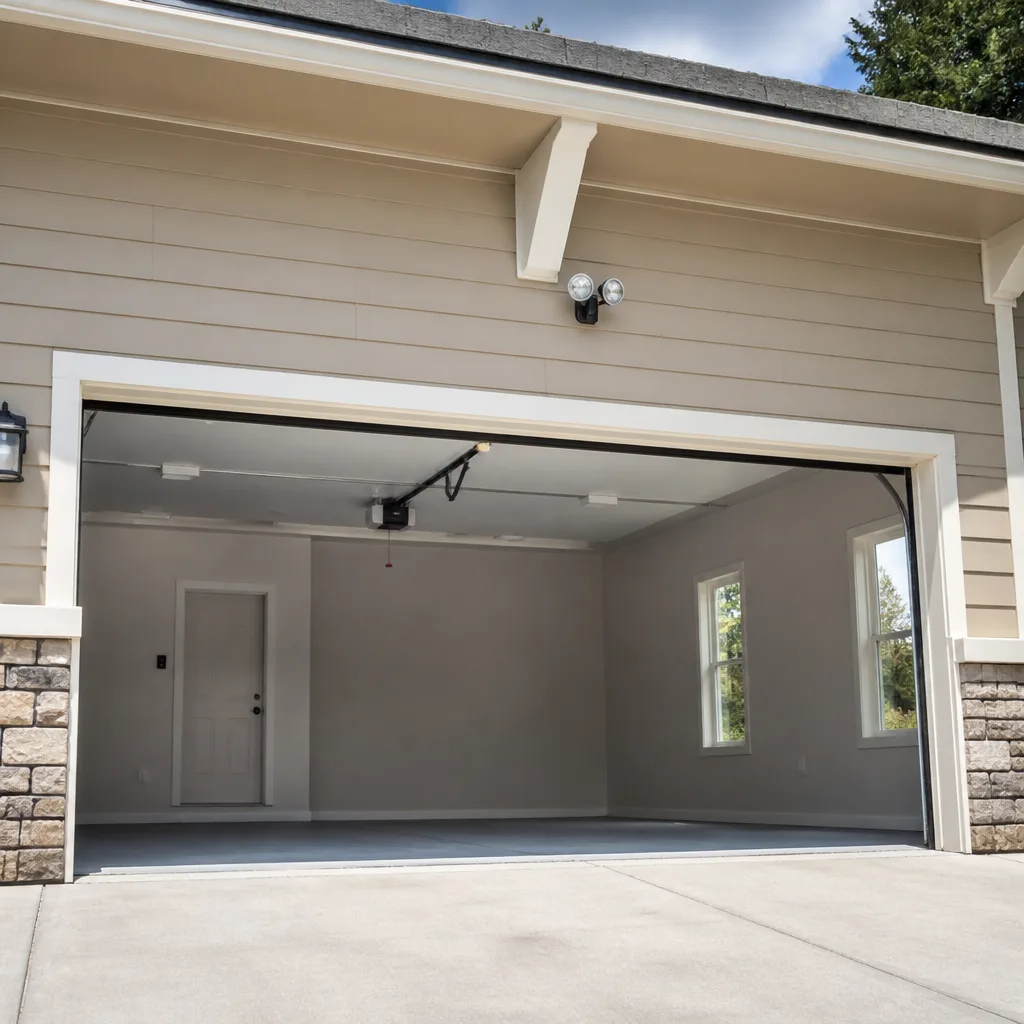 LiftMaster openers
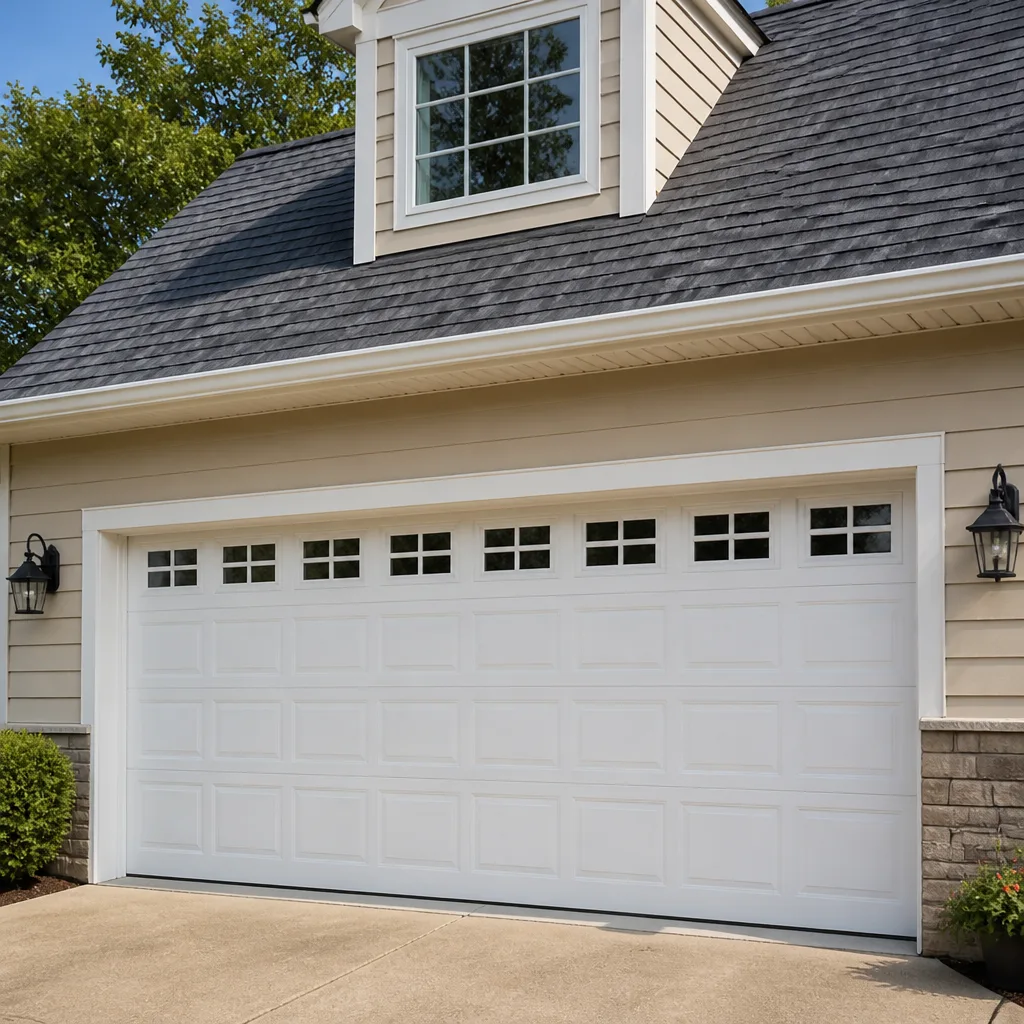 Chamberlain openers
Full 25-point door and opener safety check with every visit - springs, cables, rollers, tracks, and your LiftMaster or Chamberlain opener included
You get a price before we start. It does not change when the pro arrives.
Get your free estimateGarage Door Cost Breakdown: The Cutler Bay Homeowner’s Reference for 2026
Here’s an uncomfortable question worth asking before you sign anything: if a full garage door replacement quote here comes in far below $1,200, which of the three essentials got dropped – the permit, the wind-rated door, or the licensed labor? Because in Cutler Bay, one of them is almost always missing when a number looks too good. Our town sits inside Miami-Dade’s High Velocity Hurricane Zone, and that single fact reshapes the entire cost structure of garage door work, from the panels to the paperwork. This guide lays out 2026 price ranges by repair type, breaks a quote into its line items, and shows you where a cheaper door quietly costs more over five years. By the end, you’ll read a bid the way a technician does.
Quick Answer
In Cutler Bay, a typical garage door spring replacement runs about $180 – $340 for one spring, a full door replacement generally lands between roughly $1,800 and $4,500 depending on size, material and wind rating, and opener replacement usually falls in the $350 – $850 range. The higher-than-national pricing is driven by HVHZ-rated products, mandatory permits and inspections, and the premium on locally stocked parts. Every figure is an estimate until a written quote is prepared, and the written quote sets the final price.
Styles & brands we work with
- Raised-panel steel
- Carriage house
- Modern flush
- Full-view glass
- LiftMaster openers
- Chamberlain openers
Table of Contents
- Why Garage Door Costs Run Higher in Cutler Bay
- What the HVHZ Rating Premium Actually Buys
- Permits and Inspections: The Line Item That Gets Hidden
- Cost by Repair Type: Springs, Openers, Panels and Full Doors
- How to Read a Garage Door Quote Line by Line
- The Long-Term Cost Math: Cheap Doors vs. Right Doors
- Brand Matters: What Fits Cutler Bay Homes
- Common Mistakes to Avoid
Why Garage Door Costs Run Higher in Cutler Bay
Garage door work in Cutler Bay costs more than the national average for reasons that are structural, not arbitrary. The first is geography. Cutler Bay sits within Miami-Dade County’s High Velocity Hurricane Zone, which means every replacement door installed here has to meet a wind-load standard that most of the country never touches. The second is climate. South Florida’s humidity, heat and intense sun work on steel, wood and paint in ways that northern product lines aren’t always engineered for. The third is logistics. Specialized HVHZ hardware and branded parts don’t sit in every warehouse, so whoever stocks locally earns a premium – and whoever doesn’t has to order and wait.
Layer on mandatory permitting and inspection, and you have a market where three separate forces push prices up at once. A homeowner comparing a Cutler Bay quote to a national average pulled off a website is comparing two different products. The door that meets code here is a heavier, tested, labeled assembly with a paper trail. Walk through any Cutler Bay neighborhood – Lakes by the Bay, Saga Bay, Old Cutler Hammocks – and you’re looking at homes where that standard applies equally, whether the door is 16 feet wide or a single-car 9-footer.
None of this makes the higher number fair by default. Plenty of quotes inflate the legitimate premium with padding. The point is to know which costs are real and which are markup, because that’s what separates a fair bid from a padded one. Understanding each cost driver is how you negotiate from information instead of hope.
The three real cost drivers in one list
- Wind-rated product requirements. The door, its tracks, its anchors and its reinforcement all have to be engineered and labeled for HVHZ use.
- Permit and inspection costs. Miami-Dade requires permits and inspections for door replacement, and those fees are real money that someone has to pay.
- Locally stocked parts and brand familiarity. A technician who works on your brand regularly and can source parts locally saves you waiting time, and that convenience carries a price.
If you need a repair rather than a replacement, understanding these drivers helps you decide what’s worth doing now. Our garage door repair service covers everything from a snapped cable to a bent track, and a free estimate tells you whether repair or replacement is the better spend.
What the HVHZ Rating Premium Actually Buys
A wind-rated garage door in Cutler Bay typically costs more than a standard door, and homeowners deserve to know exactly what that extra money purchases. It isn’t a sticker. It’s a tested assembly – the door plus its reinforcement struts, heavy-duty hinges, upgraded rollers and anchors rated for the pressure the building code sets for this zone. The garage door is often the largest opening on a house, and it’s the one most likely to fail first when wind pressure builds, which is precisely why code treats it as a structural element rather than a cosmetic one.
When you buy an HVHZ-rated door, part of what you pay for is the engineering that went into it and the certification that proves it meets the standard. That certification is what an inspector looks for. It’s also what an insurer may ask about, though coverage terms vary and you should check your own policy. A door without the proper labeling doesn’t just risk failing inspection – it can create a compliance problem for the whole installation.
This is where a cheap bid usually cuts its first corner. A standard door that would be perfectly legal in a low-wind market gets priced into a Cutler Bay quote because it’s cheaper to buy, and nothing on the invoice announces the substitution. The tell is in the documentation: a legitimate HVHZ installation comes with product approval paperwork tied to the specific door model. Ask for it before you pay a deposit.
What the premium structurally buys
- Engineered reinforcement rated for the wind pressures this zone experiences
- Upgraded tracks, hinges and roller assemblies that hold under load
- Anchors and fasteners specified for the door’s wind rating, not general-purpose hardware
- Product approval documentation an inspector can verify
- A door system designed as a unit, not a door body fitted with afterthought parts
Our technicians have up to 14 years of experience working with rated products, and we install doors from manufacturers who build specifically for this market, including Clopay, Amarr, Wayne Dalton and Raynor. When we quote a replacement, the rated assembly is the baseline, not an upgrade. One call, one specialist – from broken spring to brand-new door – and the door that arrives is the one that satisfies the code here.
Permits and Inspections: The Line Item That Gets Hidden
Garage door replacement in Miami-Dade County requires a permit and an inspection, and those costs are a legitimate line item on any honest quote. Fees vary with the door and the job, so we won’t hand you a fake precise number – ask your city’s building department what the current fee schedule looks like for your address. What we can tell you is how the cost behaves on a quote. It should be visible. When a bid calls itself “all-in” and shows no permit line, one of two things is happening: the contractor is absorbing it into the door price where you can’t scrutinize it, or they’re skipping the permit entirely.
Skipping the permit is the worse outcome, and it isn’t a harmless shortcut. An unpermitted replacement leaves you with a door that has no inspection record, and that can complicate a future sale, an insurance question, or a warranty claim. The inspection itself is the county confirming the door and its installation meet the High Velocity Hurricane Zone standard. That inspection is a form of protection for you, not paperwork for its own sake.
In our experience, the permit question is also the fastest way to screen a bidder. A contractor who shrugs at the word “inspection” is telling you something about how they handle every other compliance detail on the job. Ask directly: will you pull the permit, and will you schedule the inspection? The answer should be immediate.
How the permit part of a quote should look
- Listed separately. The permit and inspection fee appears as its own line, not folded into a lump “installation” number.
- Tied to your address. Fees can vary by jurisdiction, so the number should reflect your actual property.
- Paired with a responsibility statement. The quote should say clearly who pulls the permit and who schedules the inspection.
- Backed by documentation. You should receive the product approval paperwork for the door being installed, because that’s what the inspector verifies.
If a quote is vague on any of those four points, get it clarified in writing before any work starts. The price is quoted and agreed before the job begins – that’s how we work – and it should be how anyone works on a job this regulated.
Cost by Repair Type: Springs, Openers, Panels and Full Doors
Different garage door problems carry very different price ranges in Cutler Bay, and knowing roughly where each one lands helps you judge whether a quote is in the right neighborhood. The table below shows typical 2026 estimate ranges. Every figure is a range for planning, not a fixed price – the written estimate you receive after an on-site look sets the final number, and it’s agreed before any work starts.
Typical garage door cost ranges in Cutler Bay, 2026
- Spring replacement, one spring: typically $180 – $340. Doors carry two springs, and a matched pair is usually replaced together, so a pair runs roughly twice that range.
- Opener repair: typically $120 – $300, depending on whether it’s a board, a gear, a sensor or a remote issue.
- Opener replacement: typically $350 – $850, varying with the unit and whether it’s a smart connected model or a conventional one.
- Panel replacement: typically $200 – $650 per section, depending on door model, material and whether the panel is a stocked item or a special order.
- Full door replacement, standard single-car: typically $1,800 – $3,200.
- Full door replacement, double-car, rated: typically $2,600 – $4,500.
- Cable, roller or track repair: typically $150 – $400 depending on scope.
For anything involving the door’s mechanical tension system, understand the safety reality first. Torsion springs and the cables under tension can cause serious injury if handled without the right tools and training, and this is the single most dangerous garage door repair a homeowner can attempt. Spring failure is dangerous – leave it to a trained technician. Our garage door spring repair is a dedicated specialty for exactly this reason: this work gets done with proper technique, not improvisation.
Openers are their own category. Our garage door opener repair covers the full spread, from a LiftMaster myQ unit that’s lost its Wi-Fi pairing to a Genie or Craftsman opener that’s older than the smartphone app someone tried to connect to it. If the door itself won’t move at all, that’s an emergency, and we treat it as one.
How to Read a Garage Door Quote Line by Line
A garage door quote should be readable as a set of cost responsibilities, not a single intimidating number. The way to read one is to walk each line and ask what it actually covers. Below is the sequence we’d suggest, and what belongs in each section.
Step one: separate product from labor
The door or the parts should have their own price, and the labor should have its own. A quote that blends them into one figure hides which half is inflated. If the product is priced fairly and the labor is high, you can discuss the labor. If you can’t see the split, you can’t discuss anything.
Step two: confirm what “installation” includes
Installation should cover removal of the old door, assembly and hang of the new one, spring and hardware setup, opener reconnection or replacement if needed, testing and balancing. If any of those are missing, the invoice has room to grow once work starts. Ask the bidder to spell it out, and get the answer in writing. This is where a lot of low-ball bids quietly omit, say, the opener reconnection or the balancing that follows a new installation.
Step three: check disposal
Removing and disposing of a full garage door is real work, and it should appear. A quote with no disposal line is either absorbing the cost invisibly or expecting to bill it later. Either way, ask.
Step four: check the permit and documentation lines
As covered above, permit fee, inspection scheduling and product approval paperwork should all be accounted for. Their absence is the loudest thing a cheap quote doesn’t say.
Step five: know what’s negotiable and what isn’t
- Often negotiable: door material and finish upgrades, opener brand and features, decorative hardware, whether a mid-tier or premium model is chosen within the same rated line.
- Fixed: permit and inspection fees, the rated hardware the code requires, disposal cost, and the base labor on the installation. Cutting these isn’t a discount – it’s a compliance or safety shortcut.
Step six: get the total and the start date in writing
The final line should be a total that matches the sum of the parts, and it should be agreed before anyone touches the door. Installation is measured, ordered and scheduled work, so a free measure and a written price come before the job, and the written quote is the price.
The Long-Term Cost Math: Cheap Doors vs. Right Doors
A door that saves you a couple hundred dollars up front can cost more than that over five years, and the math isn’t hard to follow once you see it. Suppose a standard, non-rated door is priced a few hundred below the compliant one. It arrives with lighter tracks, general-purpose anchors and no HVHZ certification. The first problem is the inspection – or the compliance question later. The second is what happens when the hardware meant for a lighter door starts working harder than it was designed to, under South Florida humidity and heat, and parts wear faster or need upgrading to bring the system up to local standard.
The result is a door that costs you more in rework, replacement hardware, or a second installation than the rated door would have cost the first time. And at resale, a door with proper documentation is simply easier to deal with than one with no paper trail. The cheaper door didn’t save money. It deferred the spend and added friction.
There’s a parallel logic in brands and openers. A door from a manufacturer with a strong local service network – Clopay, Amarr, Wayne Dalton and Raynor all have that – means parts and know-how are available when something needs attention. An opener from LiftMaster or Chamberlain, the two dominant smart-home names, will have technicians who know its quirks rather than have to learn them on your dime. Over time, familiarity is a cost saver. If you want a specialist who works on your brand regularly, our Cutler Bay Garage Door Repair Pros team handles the eight most widely installed door and opener brands in the area.
Weighing a replacement decision? A free estimate is where the long-term math becomes concrete for your actual door and address.
Brand Matters: What Fits Cutler Bay Homes
Brand choice affects both the price and the experience of owning the door. For doors, Clopay, Amarr, Wayne Dalton and Raynor all produce residential lines that include product engineered for high-wind markets, which matters here. Pricing within a brand varies with material, insulation and rated line, so the brand name alone doesn’t tell you the cost – the specific model does. What the brand does tell you is whether parts and service experience exist locally.
For openers, the split is between connected systems and conventional units. LiftMaster and Chamberlain lead on smart, app-connected openers, while Genie and Craftsman dominate a lot of the older installations still running in Cutler Bay homes. Service knowledge differs by family. A technician who works mostly on connected units knows their app and sensor behavior; one who works mostly on legacy units knows their gear and circuit board failure patterns. Being fluent in both is what lets us actually help rather than guess.
What to weigh when you pick
- Wind-rated line availability. Confirm the specific model meets the HVHZ standard. The brand catalog should make this clear.
- Local parts and service familiarity. A model that technicians see often is easier to service than an obscure one.
- Opener fit to the door. A heavy rated door needs the right drive and lift capacity. Mismatched is a warranty and wear headache.
- Smart vs. conventional needs. If app control matters, look at LiftMaster or Chamberlain. If reliability and simplicity matter more, a conventional Genie or Craftsman unit may fit better.
Our technicians have up to 14 years of experience across this brand spread, and our garage door opener repair covers both worlds. If a door is failing outright, our emergency service is a real offering – when the door won’t move, we move fast.
Common Mistakes to Avoid
- Accepting a quote with no permit line. In Miami-Dade, that missing line is either hidden markup or an unpermitted job. Ask which, and get the answer in writing.
- Choosing a door without asking for the rating paperwork. Product approval documentation is what proves the door meets the HVHZ standard. A door without it may fail inspection regardless of how good it looks.
- Assuming one spring price covers both. Doors have two springs, and a matched pair is usually replaced together, so the pair costs roughly double the single-spring figure. Being surprised on the invoice is avoidable.
- Trying to handle spring work yourself. Torsion springs under tension can cause serious injury. This is the one repair where a trained technician isn’t a luxury – it’s the safety line.
- Comparing Cutler Bay quotes to national averages. You’re pricing a different product. An HVHZ-rated door with a permit and inspection is not comparable to a standard door in a low-wind state.
- Letting a cheap door win on sticker price alone. A door that saves a few hundred up front and needs hardware upgrades or compliance rework over five years costs more, not less.
- Skipping the brand and model in the discussion. Two doors from the same brand can differ in price, rating and serviceability. Ask which exact model you’re being quoted.
See the difference
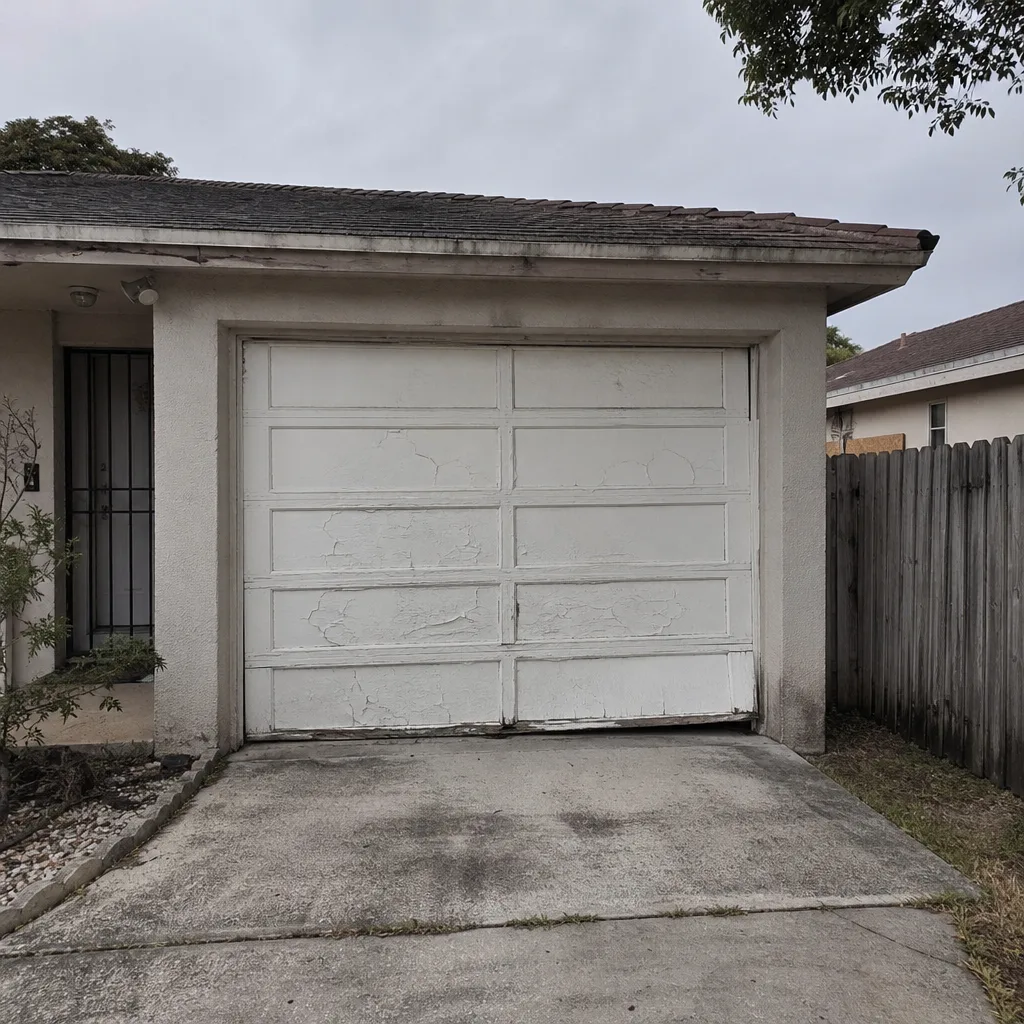 Before
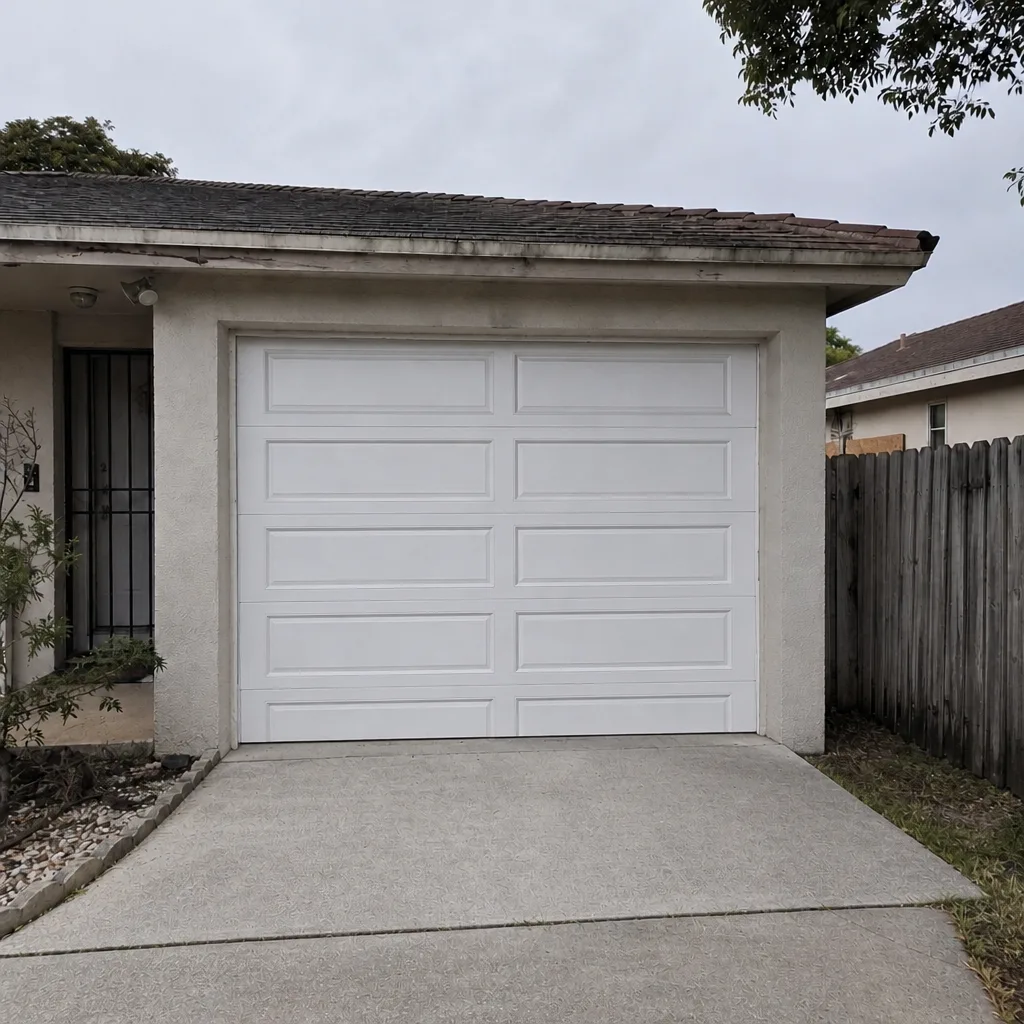 After
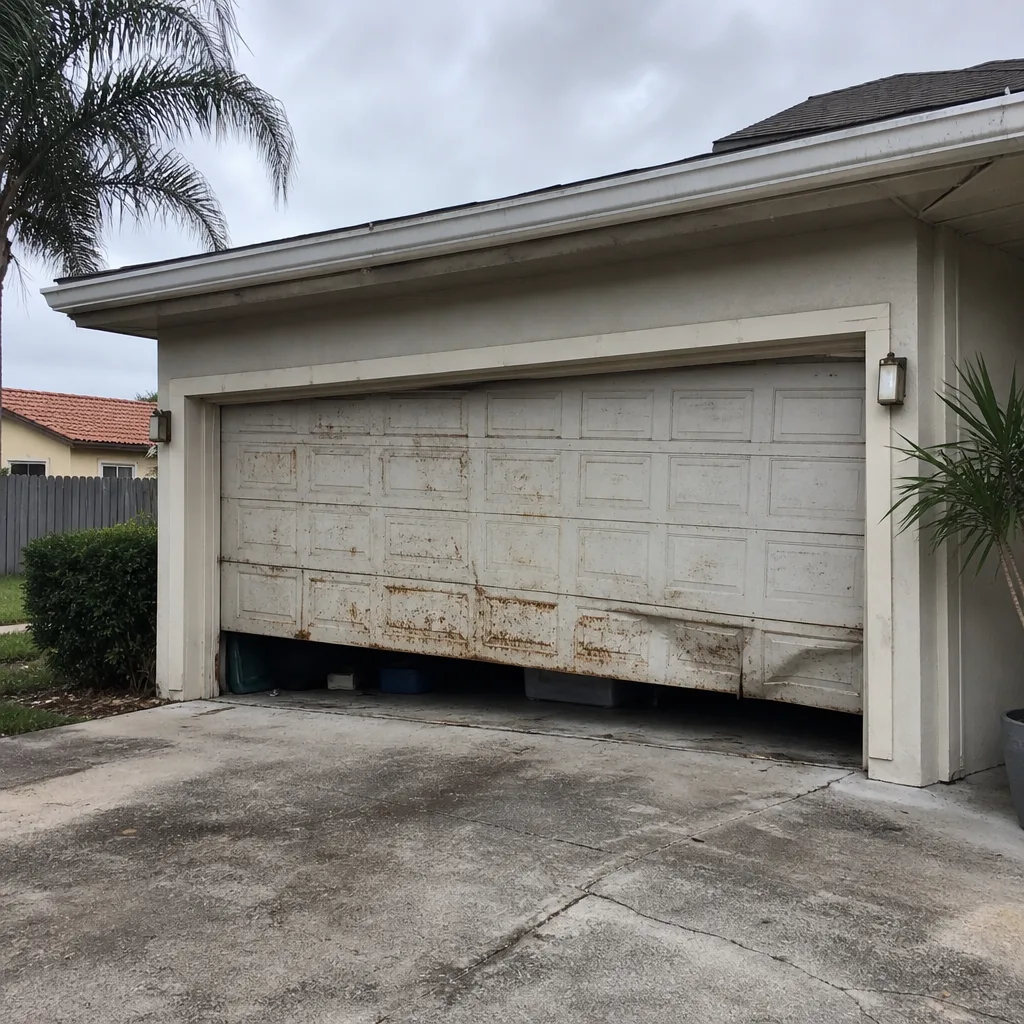 Before
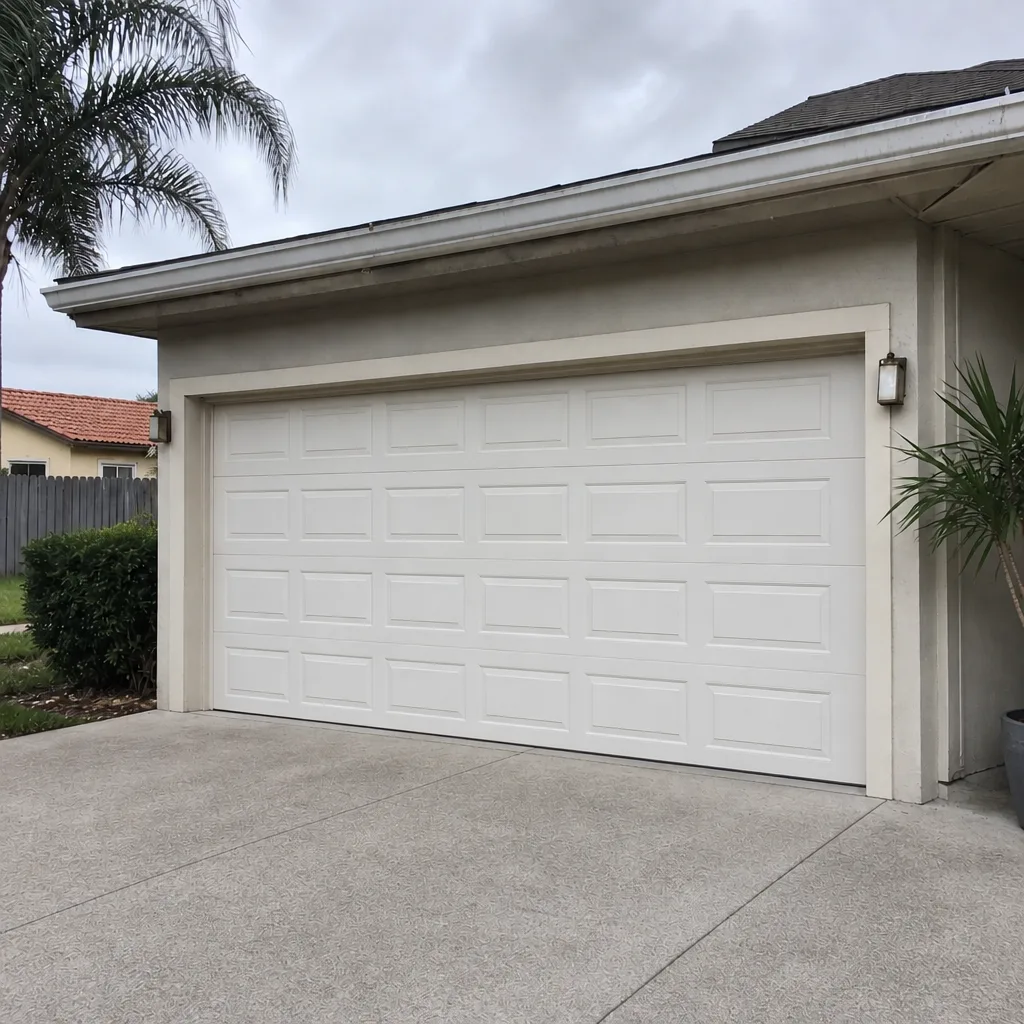 After
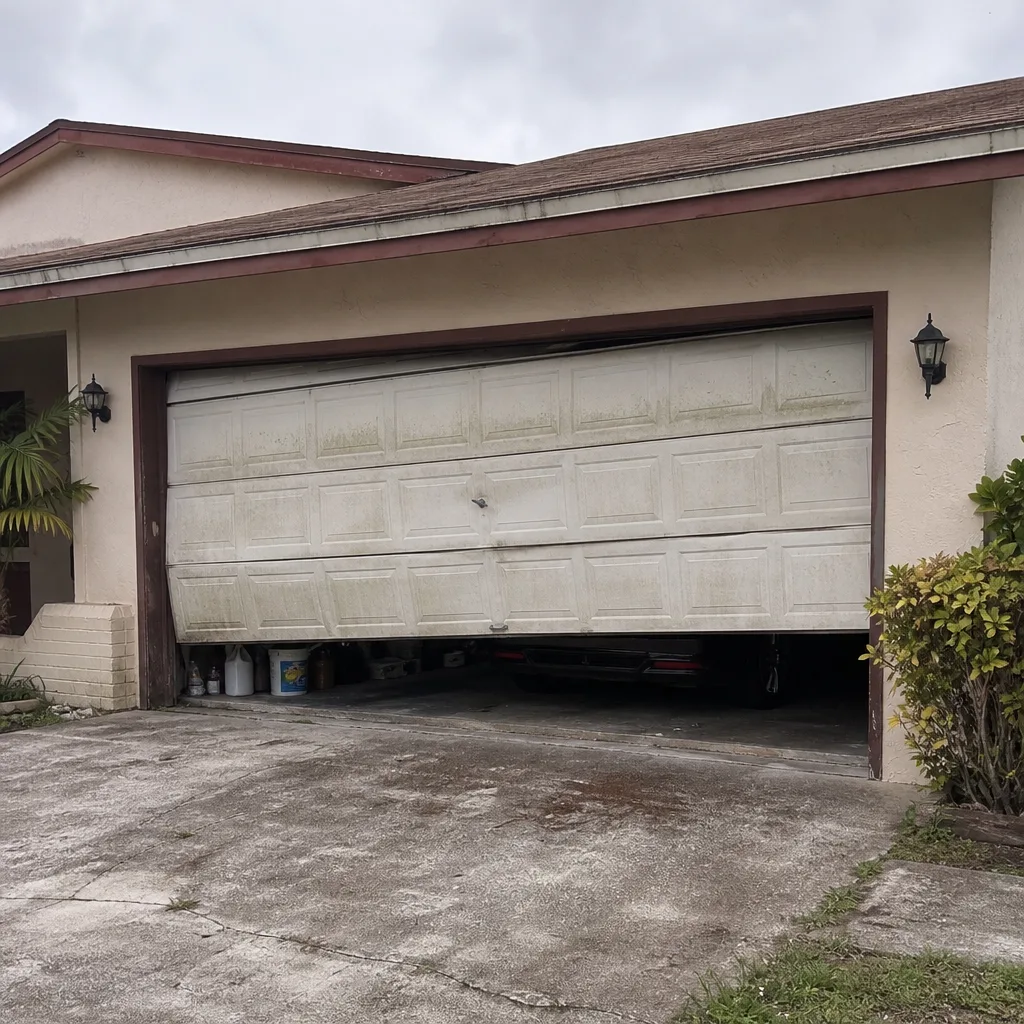 Before
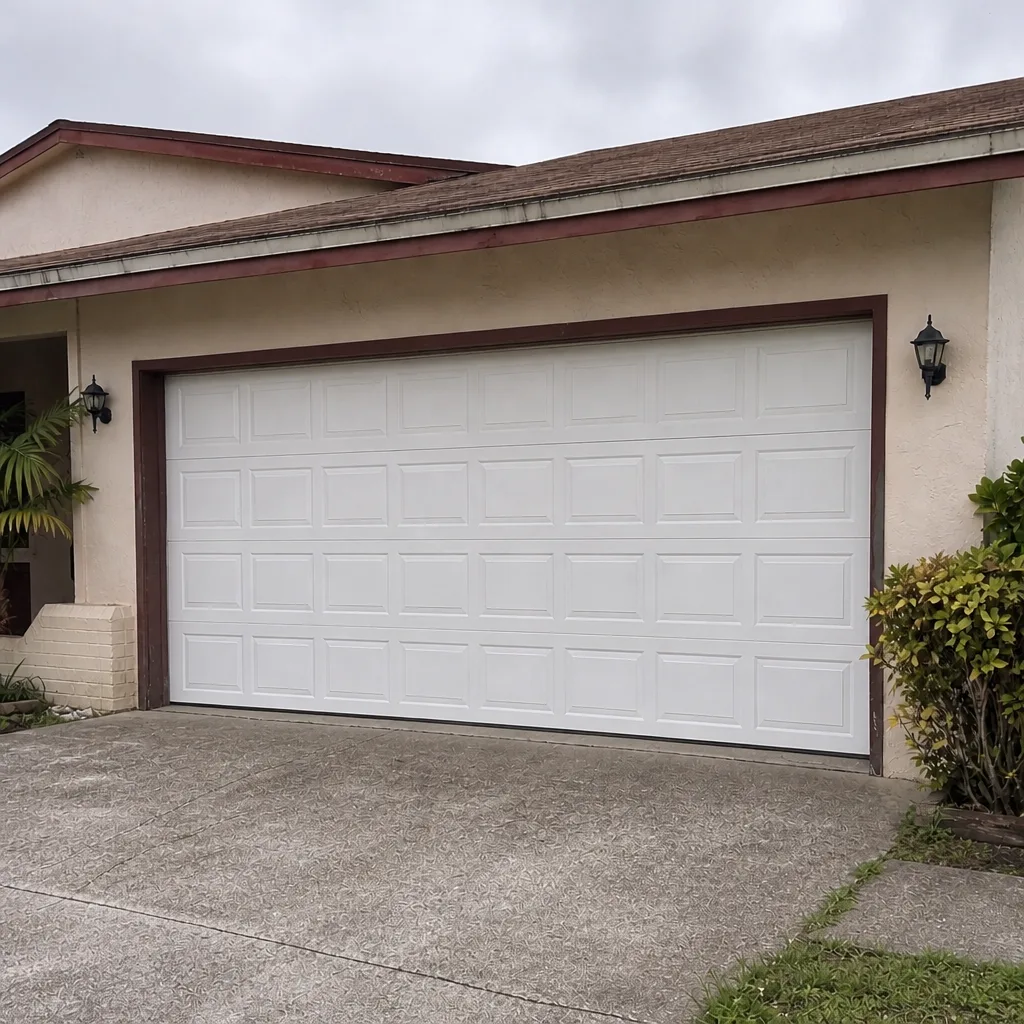 After
When to Call a Professional
Some garage door problems announce themselves clearly. If the door won’t open or close at all, call – that’s an emergency, and we offer emergency service for exactly this. If you find a broken spring, hear a loud snap or see a gap in the coil, stop using the door and call before it comes down unexpectedly. If the opener runs but the door doesn’t move, or the door reverses or strains, that’s a mechanical issue that needs an on-site look. If you’re planning a replacement, call for a free measure and a written estimate. Cutler Bay Garage Door Repair Pros offers free estimates in Cutler Bay – call (877) 492-2550, response and fast dispatch help get you moving.
Frequently Asked Questions
A full garage door replacement in Cutler Bay typically estimates between about $1,800 and $3,200 for a single-car door and roughly $2,600 – $4,500 for a double-car rated door, depending on material, model and wind rating. Every figure is an estimate until a written quote is prepared, and that quote is agreed before any work starts. Call (877) 492-2550 for an exact quote – estimates are free.
Because the job includes things most markets don’t: HVHZ-rated products, mandatory Miami-Dade permits and inspections, and locally stocked parts. Those three drivers stack, so the higher number reflects a heavier, tested, documented product rather than padding. If a quote seems high, ask to see the permit line and the product approval paperwork – that’s where the real cost sits.
No – the written estimate we give is the price, and it’s quoted and agreed before any work starts. An on-site look can change the scope if something unexpected is found (a bent track behind the trim, for instance), but any change is discussed and agreed with you before anyone proceeds. You shouldn’t sign an estimate with hidden growth built in.
We connect you with independent local professionals who are licensed and insured as the state requires for this trade. We don’t present ourselves as a general home-repair contractor – we’re a focused garage door specialist, so the work stays within that lane. Call (877) 492-2550 with any questions about credentials before scheduling.
For repair work, yes in many cases – we offer same-day service and fast dispatch, and emergency garage door service is a committed offering, not a vague maybe. For full replacement, that’s measured, ordered and scheduled work, so same-day doesn’t apply; a free measure and a written price come first. Call (877) 492-2550 to see what fits your situation.
Spring failure is the most common reason a door stops working, and it’s the most dangerous to touch yourself, which is why we treat it as a named specialty. One spring typically estimates $180 – $340, and a matched pair runs roughly twice that. Leave the tension system to a trained technician – call (877) 492-2550 for a free estimate.
If you’re still comparing options and want the wider picture, our garage door repair overview covers the full menu, and our Cutler Bay Garage Door Repair Pros page explains how to get a free estimate started.
The Bottom Line
Cutler Bay garage door pricing is higher than national averages for three reasons: HVHZ-rated products, mandatory permits and inspections, and the premium on locally stocked parts. Read every quote for those lines – if a bid looks far below $1,200 for a replacement, one of them is missing. Springs typically estimate $180 – $340 each, opener repair $120 – $300, opener replacement $350 – $850, and a full door replacement $1,800 – $4,500. Every figure is an estimate until you have a written quote, and that quote is agreed before any work starts. Call Cutler Bay Garage Door Repair Pros at (877) 492-2550 for a free estimate.
Written by the team at Cutler Bay Garage Door Repair Pros.